CRM for investor relations: how top firms manage LP and GP relationships in 2026


Managing LP relationships across fund cycles, capital calls, and co-investment opportunities has become one of the most operationally demanding functions at VC and PE firms. According to Affinity's analysis of 3,000+ venture capital firms, all firms sent and received 17% more emails in Q4 year over year. The firms that translated that volume into stronger LP retention made 16% more introductions than their peers.
The divide between firms that retain LPs and those that lose them is increasingly about the investor relations CRM behind the team. It’s the difference between having an IR team backed by automated data and one that’s still digging through spreadsheets to prep for an annual meeting. When you can’t see the full history of an LP relationship, it shows.
This guide covers what to look for in an investor relations CRM, how top firms use relationship data to manage LP and GP engagement, and where AI is starting to change the workflow.
Key takeaways
- Top-performing firms made 16% more introductions year over year, according to benchmark data from 3,000+ firms, providing evidence that investor relationship management is a competitive differentiator.
- A CRM built for private capital (VC and PE) centralizes LP communications, fundraising pipeline tracking, and relationship data in one platform, replacing the spreadsheets, email threads, and standalone IR tools that most firms have outgrown.
- AI is changing how IR teams work, with automatic meeting transcription, LP record enrichment, and relationship strength scoring reducing manual effort and giving firms better data on which investor relationships need attention
How top-performing firms manage investor relationships
The way firms manage investor relationships is changing. The data shows the gap between top performers and everyone else is widening.
The firms that consistently raise follow-on funds and maintain strong LP retention share a set of common behaviors. According to Affinity’s analysis of activity data from 3,000+ VC firms across 68 countries, top-performing firms made 16% more introductions year over year than their peers. Across the broader market, all firms sent and received 17% more emails in Q4 2025, and added 4% more new contacts year over year. This indicates that relationship volume is increasing industry-wide, and the firms that translate that volume into meaningful LP engagement are pulling ahead.
This matters for investor relations because 42% of investors cite competition as the single biggest factor impacting their deal flow. In an environment where LPs have more options and more data than ever, the firms that win repeat commitments are the ones whose IR teams can demonstrate a living, active relationship. That means tracking every touchpoint automatically, knowing which LP relationships are warming or cooling, and being able to show LPs a consistent story about portfolio performance backed by real engagement data.
Speedinvest offers one example of what this looks like. After investing in relationship infrastructure, the firm increased its coverage of future Series A European company rounds by more than 30%. This was a direct outcome of having better data on which portfolio companies and investors were connected to which opportunities.
The full dataset behind these findings is available in the 2025 Venture Capital Benchmark Report.
LP engagement and reporting: what modern IR teams need
Two-thirds of PE investors expect deployment activity to increase in the coming year, according to Affinity’s PE Benchmark data. More deployment means more portfolio companies, more capital calls, more distribution communications, and more LP touchpoints to manage. IR teams that were handling fundraising communications manually or in spreadsheets are hitting a wall.
Modern LP engagement requires three capabilities that generic CRMs and standalone IR tools typically handle separately:
Automated LP communication tracking
Every email, meeting, and touchpoint with an LP should be captured automatically. When your CRM records interactions in realtime, your IR team can see the full communication history with any LP in seconds, ensuring no one shows up to a meeting without knowing what was discussed last quarter.
Fundraising pipeline visibility
The same pipeline management capabilities that track deal flow should extend to fundraising. They should show which LPs are at which stage, who has received materials, who needs a follow-up, and where each commitment stands relative to the fund target. The advantage of managing fundraising in the same platform as deal flow is that your IR team can pull live deal data into LP updates without exporting from one system and importing into another.
Relationship context across fund cycles
LP relationships span years and multiple fund cycles. A CRM that only tracks the current fundraise misses the context that matters. How engaged was this LP in Fund II? Who on our team has the strongest relationship with their CIO? When did we last share portfolio company updates with them? Relationship intelligence surfaces this context automatically from years of communication data, giving IR teams an institutional memory that doesn’t depend on any single person remembering what happened.
Why investment management CRM and IR live in one system
Most investment managers run investor relations on tools that were never built to talk to each other: a deal-flow CRM for pipeline, a spreadsheet for the fundraise, and an inbox for everything an LP actually said. An investment management CRM closes that gap by holding deal data and investor data in the same platform, so the IR team prepping an LP update pulls live pipeline numbers without exporting from one system and re-keying them into another.
The distinction that matters for private capital is fit. A generic investment CRM tracks contacts and stages. A CRM built for investment managers in PE and VC captures every LP and deal interaction automatically, which means the relationship history is complete the moment a partner walks into a meeting rather than as complete as someone remembered to make it.
Why a CRM is essential for your investor relations management strategy
A venture capital CRM not only provides a way to automate contact management, improve collaboration with your important stakeholders, and streamline current deal workflows, but it can also serve as the foundational technology for your investor relationship management strategy.
The most important reasons your team needs a CRM for investor relations are:
Providing visibility into your deal flow pipeline
Your CRM platform is already a central repository for all of your important deal information and supports the high-volume, relationship-driven nature of investing. With that data already on hand, you can easily showcase:
- The scope of your existing deal pipeline
- The status of current deals
- The expected outcomes from your current funnel
- Built-in, real-time analytics that allow you to consolidate your deal pipeline into easily digestible reports. Work with your LPs to build reporting dashboards that directly address the data that they find impactful.
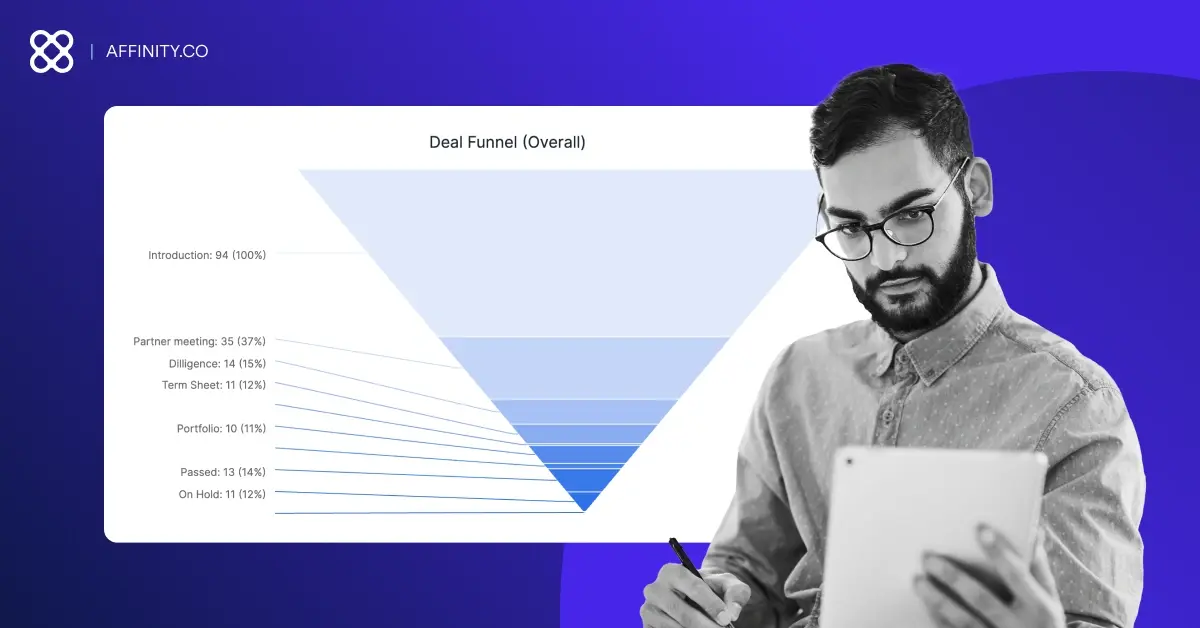
Providing consistent updates that cover the data your LPs care about helps your team tell a consistent story centered on how you’re delivering value, helping your partnerships prosper, and reinforcing your reputation as a partner that meets—and exceeds—their expectations.
Supporting existing LP relationship management
Your current LPs already have a vested interest in your team’s success. You have the data and the toolset to keep them up to date on your most important deals, and this is a great start to supporting the relationship.
Much like your connections to founders, your connection to your investors is a sophisticated, long-term relationship, not a simple, transactional interaction. Sharing deal pipeline data alone might help you get ahead of the competition, but it won't keep you there.
A vital piece of your investor relationship management process has to be actually engaging with your relationships. Here are two ways you can utilize your venture capital CRM to support that process.
Tracking communications
Automated activity tracking means every interaction your team has with an LP is recorded in a single place. This key function of a VC CRM not only includes direct communications like emails, meetings (including automated transcripts and summaries), and phone calls, it also gives you a place to attach files directly to a contact record so you know what you shared and when.
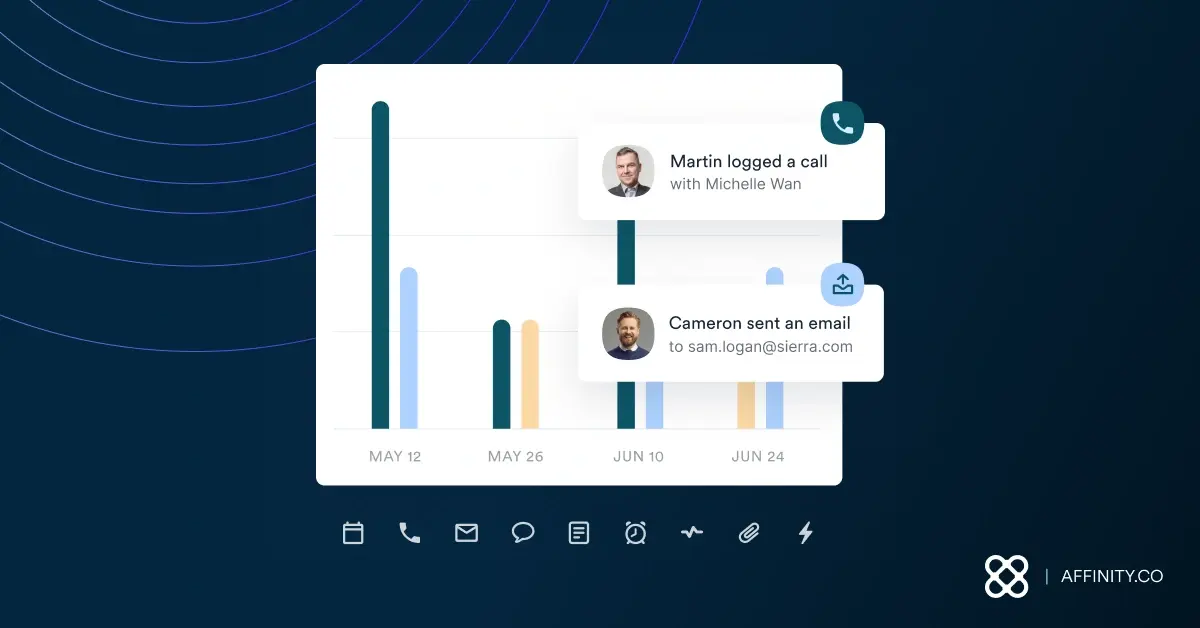
Having a single record also means your team can remain aligned on goals established with your LPs. With team-wide communications logged together, you can review the conversation and information shared in a previous meeting and ensure there is a direct continuity between calls. Telling a consistent story establishes trust between you and your LPs by reassuring them that you can set and stick to the plans you create together.
Prompting follow-ups
Investor relations management tools also support an active approach to building stronger business partnerships. With built-in reminders, you can set a regular cadence to follow up on a previous interaction so you can keep your connection warm. Even if you don’t have overwhelmingly positive (or negative) news to share, effective communication through regular updates must be a core part of your IR strategy to remain top of mind.
Building relationships with new LPs
Connecting with new LPs and building relationships with them helps your firm grow, but you can't rely on developing these important relationships from cold emails or phone calls. A CRM supported by relationship intelligence technology can get your foot in the door, allowing you to use your existing data and prove your team is worth the investment.
Creating warm introductions
A venture capital CRM takes the guesswork out of finding new paths to warm introductions. AI-driven relationship intelligence algorithms provide your team with deeper insight into their collective network and eliminate the need to ask questions like “do we have any connections to this team?” or “who is the best person at our firm to reach out to this contact?” Now, your potential connections aren’t just limited to your GP’s rolodex—you can find ties to anyone on your team.

An investor CRM lets you source new connections to potential LPs based on actionable data already in the system—like relationship strength scores that quantify just how well someone on your team knows someone. These insights also help uncover new introduction paths that would otherwise remain hidden in Excel spreadsheets or email inboxes.
Additionally, the right investor relationship management solution will be enriched by third-party data sets that build on your team's existing library of information. For investment teams, partners like Pitchbook and Crunchbase integrate directly with CRM platforms like Affinity so your investor profiles and organization data are always up to date, and you can show up smarter to your next call.
Affinity’s MCP server also brings that LP relationship data into AI assistants like Claude, ChatGPT, Gemini, and Microsoft Copilot, so IR teams can ask about investor relationships wherever they already work.
Tracking fundraising
CRM software built for private equity and venture capital teams is designed with deal flow management at the forefront. The best CRM solutions are flexible enough to turn investment deal flow management tools into fundraising management tools. By automatically tracking all of your contact information and deal data related to your LPs, you can track and manage your firm's funding rounds and the most important details about the relationship in one place.
Much like tracking potential investment opportunities for your team, you can use opportunity lists in your CRM to monitor specific funds as they move through specific deal stages—from First Meeting to Due Diligence and through to Closed/Won.
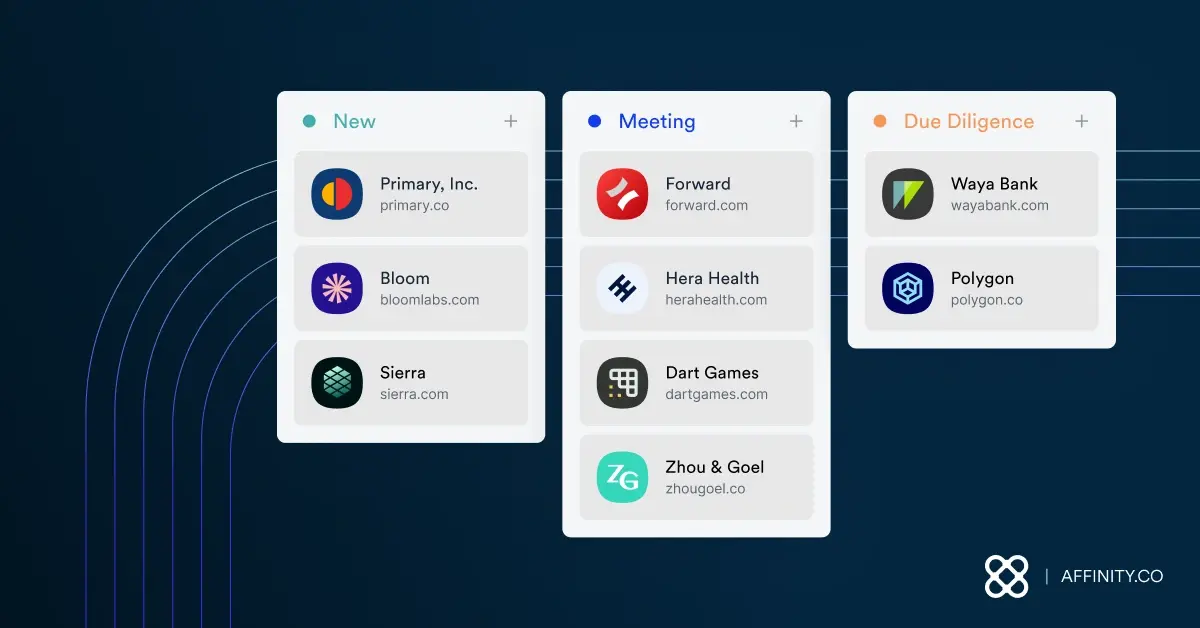
Custom columns also give your IR team the ability to categorize LPs based on criteria that matter to you (like industry or previous funding amounts) and track key notes (like specific fundraising processes they adhere to).
Opportunity-specific lists in your CRM gives you the ability to focus on the information directly relevant to the current round of fundraising. By monitoring these fundraising processes in your CRM you can link current opportunity data to your entire communication history, so you can manage them separately but surface more details with the click of a button.
How AI is changing investor relationship management
AI is moving from an experimental curiosity to a core part of how private capital firms manage investor relationships. According to Affinity’s research, 64% of investors now use AI to accelerate company research, and the applications are expanding rapidly beyond deal sourcing into investor relations.
The most practical AI applications in IR today are features that save teams hours per week on tasks they’re already doing manually. These include:
- Automatic transcription and summarization of LP meetings, so the notes are in the CRM before the partner finishes the call.
- Contact enrichment that keeps LP records current without anyone updating a spreadsheet.
- Relationship strength scoring that flags when a key LP relationship has gone quiet, before the annual meeting becomes an awkward reintroduction.
For fundraising teams specifically, AI-assisted deal preparation means walking into LP meetings with automatically generated briefing documents that pull together the LP’s investment history, recent communications, portfolio overlap, and outstanding commitments. TELUS Global Ventures describes the impact directly: “With its automation capabilities, [our CRM] does the heavy lifting. Triggers ensure we get the right data at the right time, and reports are automated and have a scheduled delivery,” says Kat Nicanorova, Operations Manager. The firm reports 60% fewer missing fields and 2.5 hours saved per person per week.
This is what separates an AI-first CRM from a CRM with AI features added on. The AI should reduce the work of managing investor relationships, not add another platform to manage.
How to choose a CRM that supports investor relations
Investor relations software for private capital comes in two shapes: dedicated IR tools that handle reporting and portals, and a CRM that manages the relationship and the fundraise alongside deal flow.
Your team needs one investor relations platform that supports building a full investor relations strategy. A CRM for venture capital provides clear visibility into your deal flow pipeline, helps support existing LP relationships, build new relationships, and track fundraising alongside it all.
Traditional CRM software helps facilitate quick, transactional sales, but these platforms lack the technologies necessary to build and manage the rapidly evolving, relationship-driven networks required for investor relations.
In order for your firm to secure funding and remain competitive as more and more firms compete for investment dollars, you have to consolidate and streamline your process for managing relationships with your limited partners.
Your CRM should harness the power of automation and relationship intelligence to reduce cold outreach while alleviating manual activity tracking and reporting. This gives your team the freedom to focus on the high-impact work that matters: actively supporting the investor relationships that drive your business.
Get the AI-first private capital CRM
Affinity, the AI-first private capital CRM, brings together all the tools you need to manage key relationships and close more deals. Affinity uses relationship intelligence to help you make the most of your network and retain your best investors—while also expanding your network of LPs.
Understand the strength of every relationship within your firm, right alongside deal-critical data so you can uncover better opportunities and find the right investors based on your fund strategy.
Affinity mobile enables your team to more efficiently collaborate, access investor information, and build lasting relationships from anywhere. And make it easy to share important context with key stakeholders using Commenting and Collaborator Seats to track and nurture your relationships all in one place.
CRM investor relations FAQs
What is an investor relations CRM?
An investor relations CRM is a platform that centralizes LP communications, fundraising pipeline tracking, and relationship data for private capital firms. Unlike public-company IR tools (which focus on earnings management and shareholder communications), a private capital IR CRM manages the ongoing relationships between GPs and LPs across fund cycles, capital calls, distributions, and co-investment opportunities. The most common platforms used for IR in private capital include Affinity (the AI-first private capital CRM, with relationship intelligence and automatic data capture), Allvue Systems (fund management and LP reporting), DealCloud by Intapp (enterprise deal lifecycle management), and Juniper Square (fund administration and LP portals). The right choice depends on whether your firm needs a dedicated IR tool or a CRM that handles both deal flow and investor relationships in a single platform.
What features should an IR CRM have?
An IR CRM for private capital firms should include automatic activity capture (logging every LP email, meeting, and touchpoint without manual entry), fundraising pipeline management (tracking LPs through commitment stages), relationship intelligence (mapping who in your firm knows who at each LP), LP reporting and analytics (generating updates on portfolio performance and fund metrics), and enterprise security (SOC 2, GDPR compliance for handling institutional investor data). The most important feature distinction is between CRMs that require manual data entry and those that capture LP interactions automatically. Adoption depends on this, and a CRM that nobody uses is worse than no CRM at all.
How do top VC firms manage investor relationships?
Top VC firms manage investor relationships by treating LP engagement as a structured, data-driven practice rather than an ad hoc responsibility. According to benchmark data from 3,000+ firms, the highest-performing firms made 16% more introductions year over year and sent 17% more emails in Q4. Strong IR teams maintain active communication cadences, using a CRM that automatically tracks every LP interaction, provides fundraising pipeline visibility across fund cycles, and surfaces relationship strength data so IR teams know which LP relationships need attention before it’s too late.
Is an investor relations CRM the same as investor relations software?
They overlap but are not identical. Investor relations software is a broad category that includes public-company tools for earnings and shareholder communications. For private capital, an investor relations CRM is the relevant slice: it manages the ongoing GP–LP relationship across fund cycles, capital calls, and co-investments, with automatic activity capture and relationship intelligence rather than the disclosure workflows public-company IR software is built around.
What is the best CRM for investor relations?
There is no single best fit, because the right investor relations CRM depends on whether a firm needs a dedicated IR tool or a platform that handles deal flow and investor relations together. Firms managing both fundraising and sourcing tend to consolidate on an AI-first private capital CRM such as Affinity, which captures LP interactions automatically and surfaces relationship strength across the team. Firms that only need LP reporting and portals often pair a fund administration tool with their existing stack. The deciding factor is adoption: a CRM that requires manual data entry usually goes unused, and a CRM nobody uses is worse than none.
Related Articles


Put your firm’s network to work