PRIVATE CREDIT
Move on the deal before another lender does
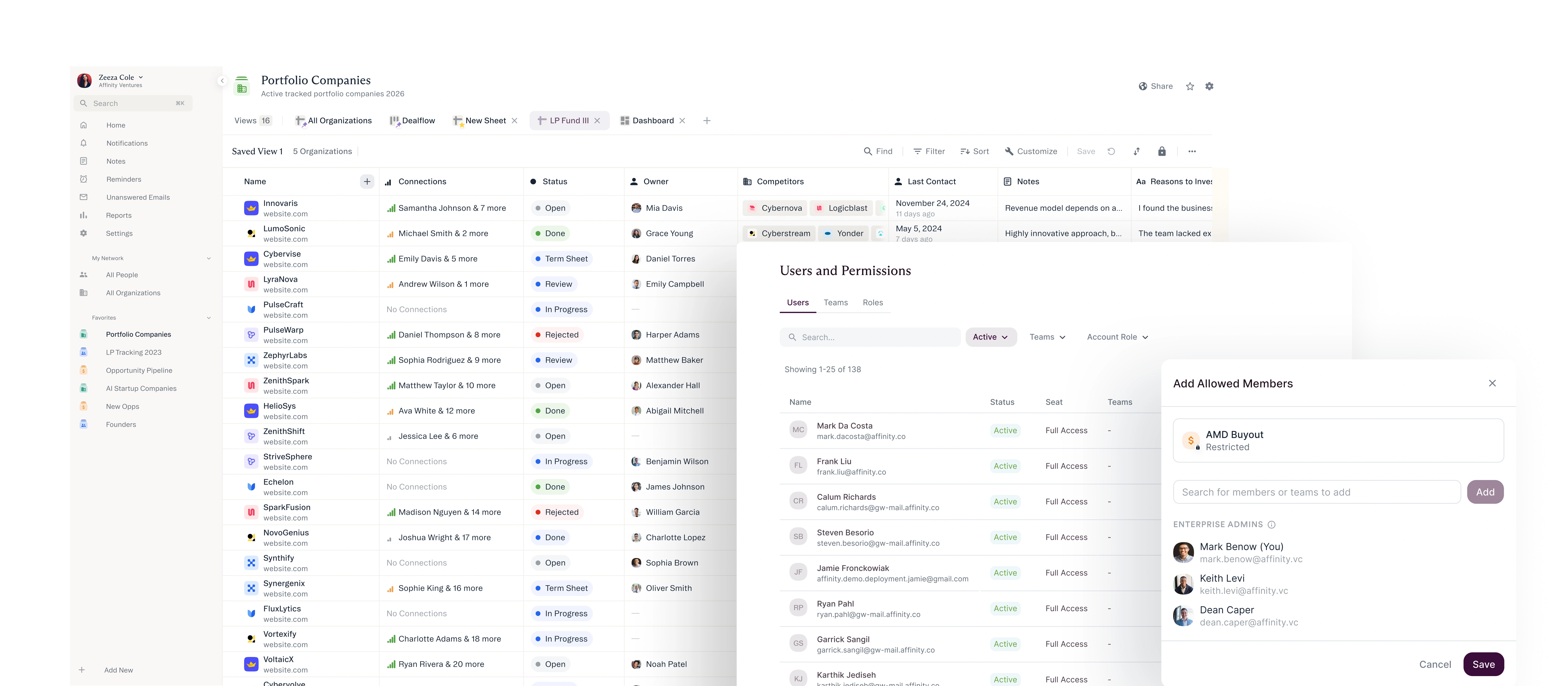
Affinity automatically captures every email and calendar interaction, keeps deal and relationship data clean, and shows your team the fastest path to any borrower, sponsor, or intermediary.

.webp)
Introducing Affinity Ascend
Purpose-built agents to support specific private capital workflows. Ascend preps every meeting, captures every conversation, and automatically updates your pipeline and CRM data.

"Much of our deal flow and CRM data capture is now automated. We've integrated Affinity with our internal tools, and it has become a central part of our wider AI transition."

Built for the specifics most CRMs miss
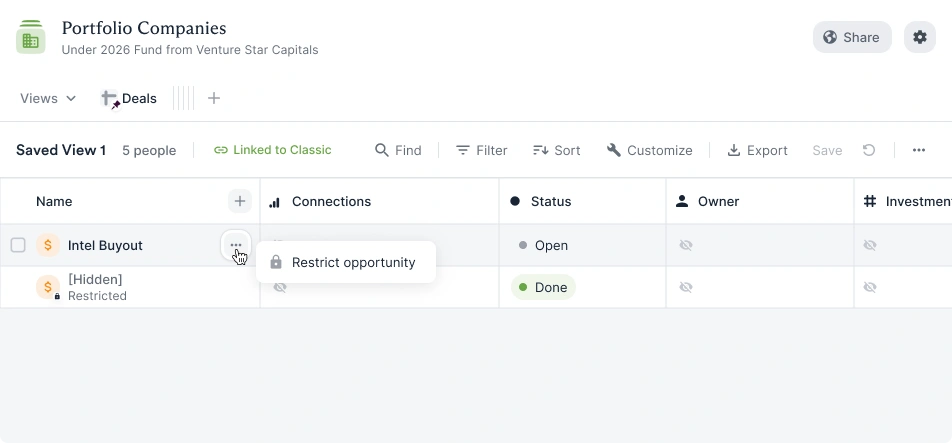
Deal-level privacy
Flag a deal restricted and set a per-deal allow list. Everyone outside it sees an accurate pipeline count, not deal detail, keeping MNPI exposure to the deal team you've named.

Team-based permissions
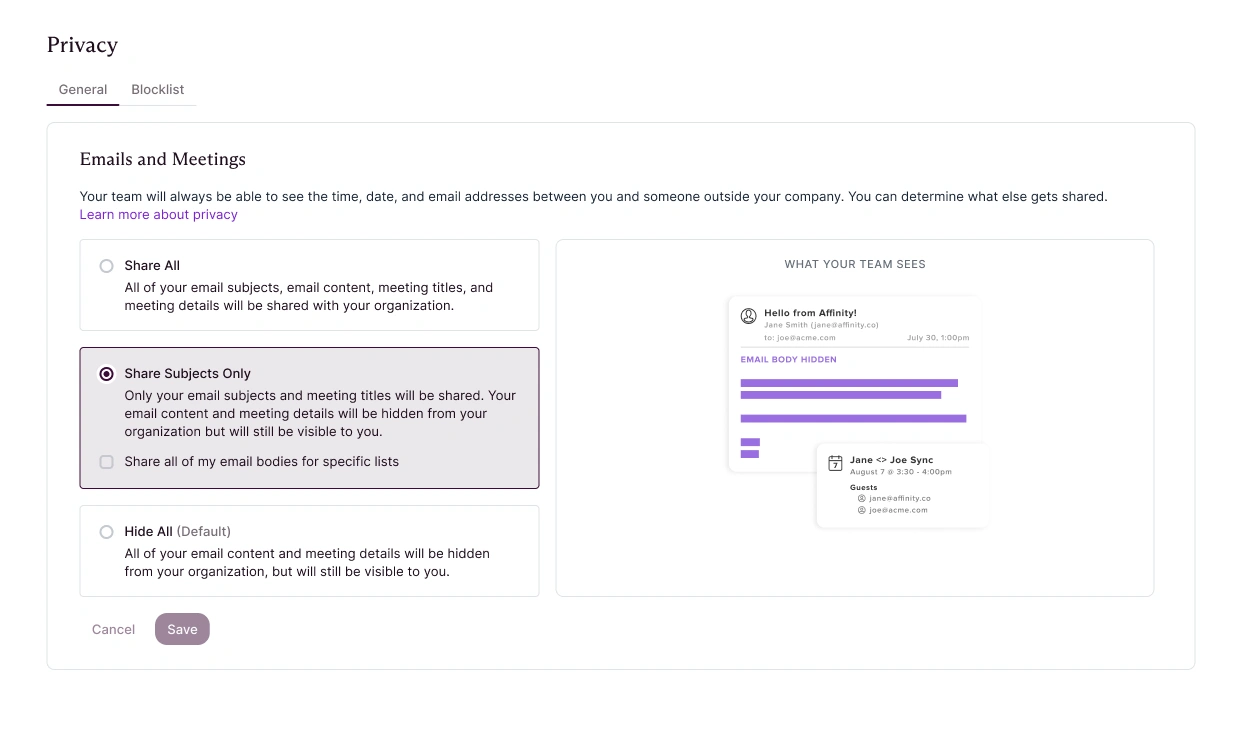
Silo notes, files, and lists by team. The relationship network stays visible everywhere, so coverage never disappears behind a permissions wall.
Open by default
Affinity’s MCP connects to Claude, ChatGPT, and Snowflake without a custom integration project.
.webp)
What private credit firms ask
Private credit teams need origination coverage and portfolio monitoring in one system. That means tracking the sponsor and intermediary relationships that generate deal referrals, recording every touch across the origination team, and holding borrower records through the life of a facility. The relationship layer matters more than in equity since repeat sponsor flow is the channel.
Sponsor coverage is relationship coverage. Firms track which professionals hold the relationship with each sponsor, how active that relationship is, and when it last produced a look. Where capture is automatic, a sponsor who has gone quiet shows up as a declining score months before anyone notices the referrals stopped.
At minimum, email and calendar for activity capture, plus the data warehouse where the firm runs portfolio and facility reporting. Direct integrations with Snowflake, Databricks, and BigQuery let credit teams join relationship and origination data to performance data. Affinity draws on 40+ enrichment sources and offers flexible APIs plus direct warehouse connections.
No. Private credit firms often run origination and LP fundraising through the same team, at the same time, a structure PE's single-pipeline model isn't built around. Team-based permissions organize by function. Relationship and company data stay visible firm-wide, so warm paths surface across deal and IR alike.
Affinity's MCP connects your pipeline and relationship data to Claude, ChatGPT, and other AI assistants, so your team can ask questions and update records without opening the CRM. It's also how IR teams without a dedicated LP portal build relationship summaries and LP updates today, using the same data the deal team already trusts.
Team-based permissions silo notes, files, and lists by team, so origination and IR aren't working out of each other's records. Relationship and company data stay visible firm-wide, since that's what surfaces who's already talked to whom. For one especially sensitive deal, restricted opportunities adds a per-deal allow list on top, masking details for anyone outside that list. Admins retain visibility by design.
Affinity holds the borrower record alongside the origination history that produced it, so the team monitoring a facility sees the same relationship context as the team that sourced it. Custom fields track facility terms and review dates, and workflow automations flag what is coming due. Portfolio data pushes to Snowflake or BigQuery for firm-level reporting.
Put your firm’s network to work