Built for private equity
Get from CIM to first bid faster
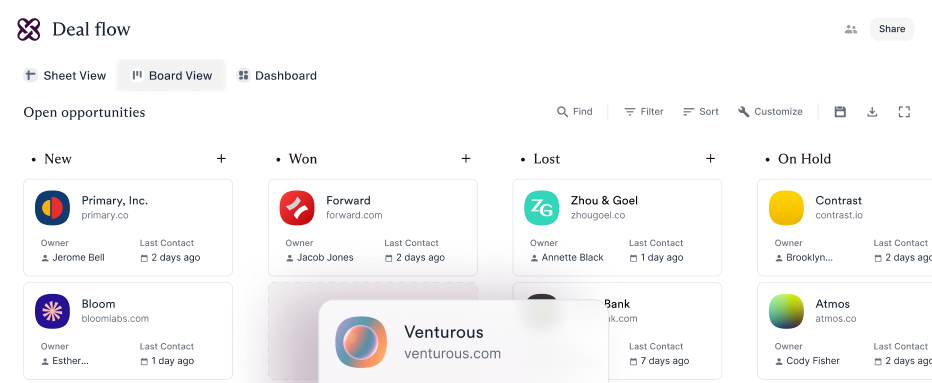
Spend your time connecting with the right people and making the right calls. Delegate pulling coverage, drafting memos, and logging updates to Affinity, the AI-first private capital CRM.

.webp)

















One agent platform, every stage of the deal
Affinity Ascend is the agent platform for private capital, designed by Affinity and configured by your firm. It works sourcing through exit, surfacing warm founder intros, prepping meetings, drafting investment memos, and tracking portfolio signals, so your team spends time on judgment, not procedure.
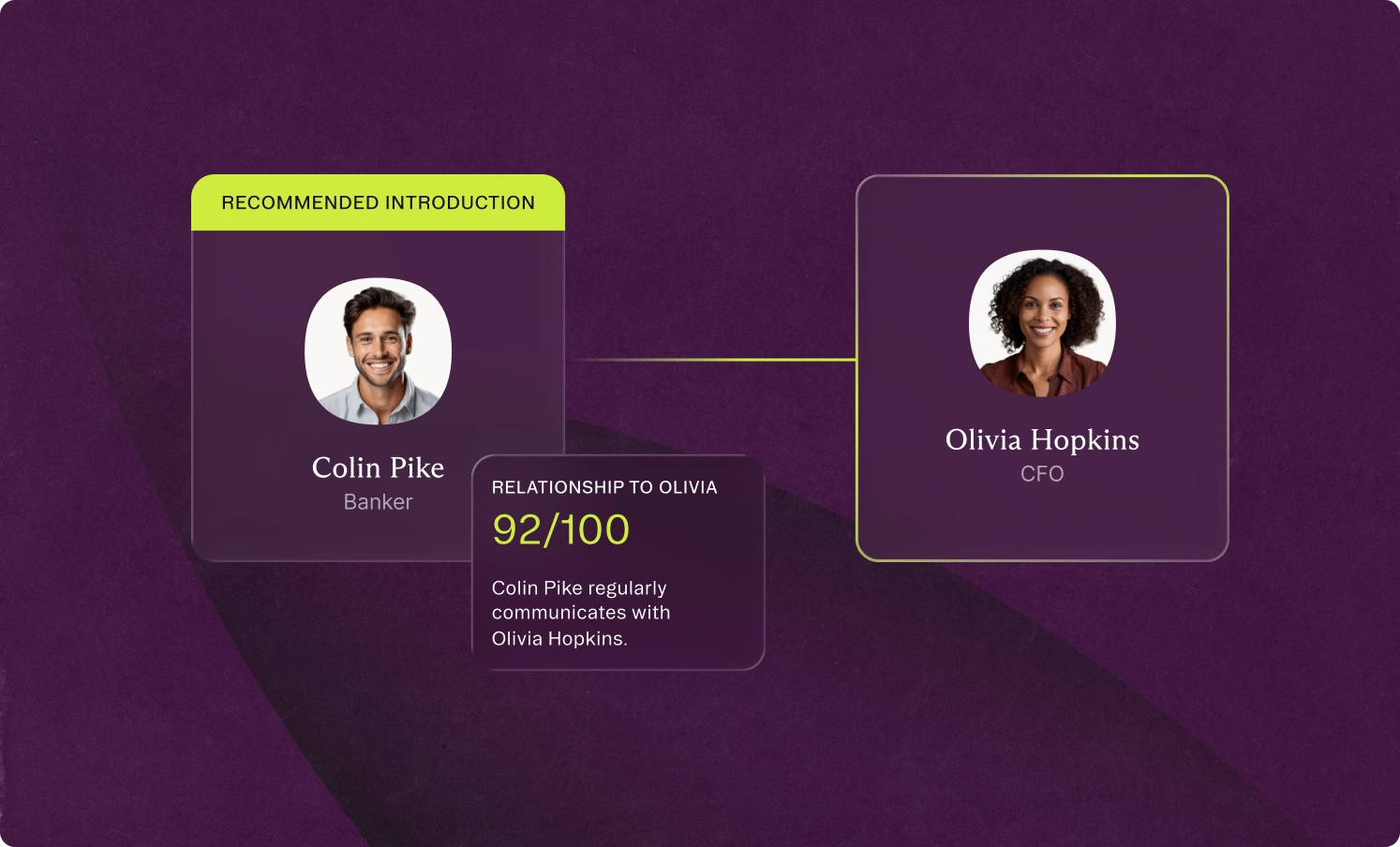
Get there first with the right intro
Affinity tracks banker coverage and inbound signals automatically, parses CIMs the moment they land, and surfaces the fastest warm path into a target before a process reaches auction.
Motive Partners
66%
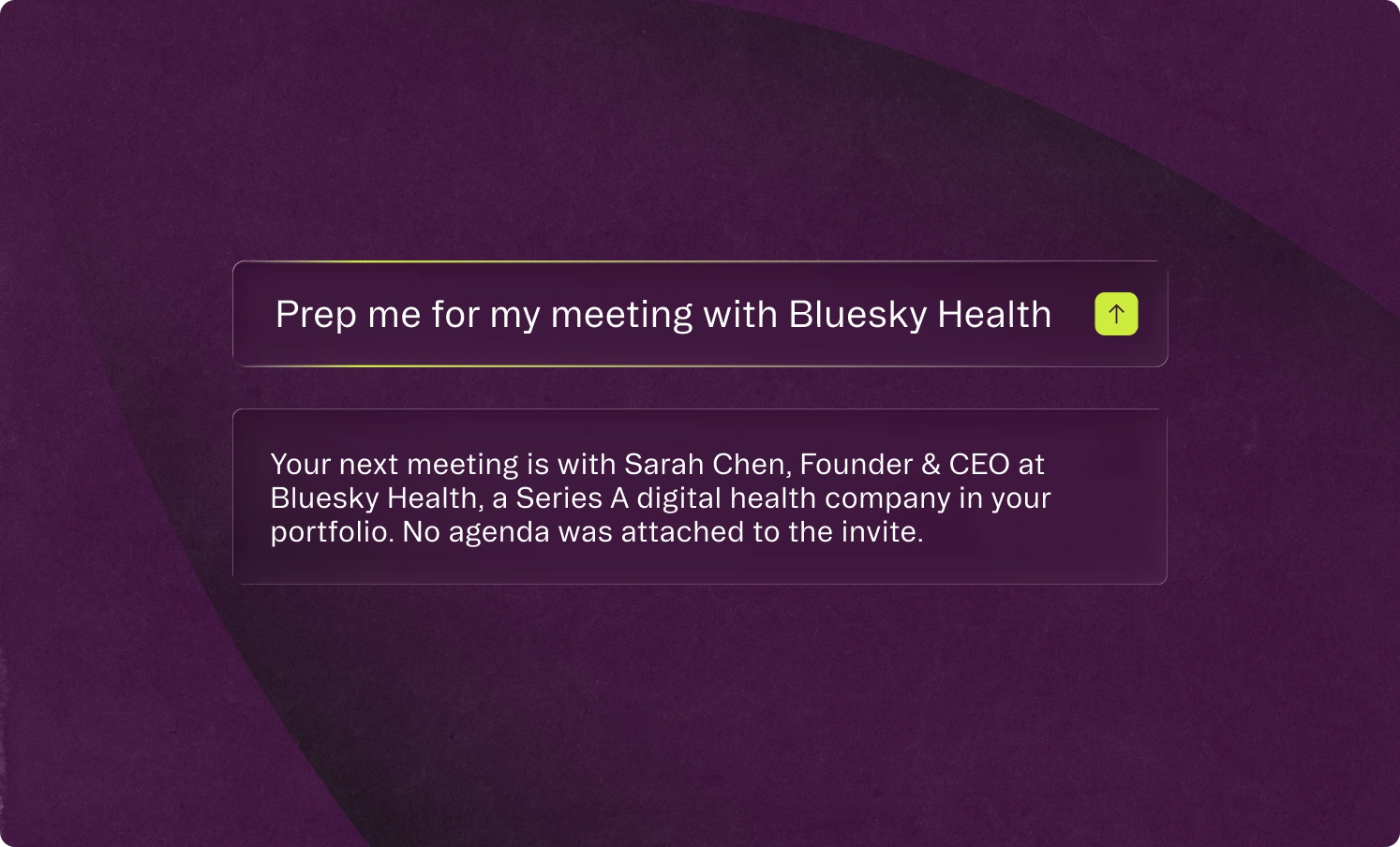
Focus on the meeting, not the prep
Affinity assembles the management brief, relationship history, and deal context before every meeting, so your team walks in ready instead of building the file themselves.
Bain Capital
“What used to be a 5–10 minute, multi-screen, multi-app workflow after every meeting is now one 30 second natural language request: polished prose, calendar context, and the right entity tags posted directly to Affinity for visibility across my team.”
– Stephen Lanz, Principal
Prioritize the debate
Affinity drafts the IC memo, synthesizes red flags from diligence, and logs every decision, so the committee spends its time debating the deal, not assembling the paperwork behind it.
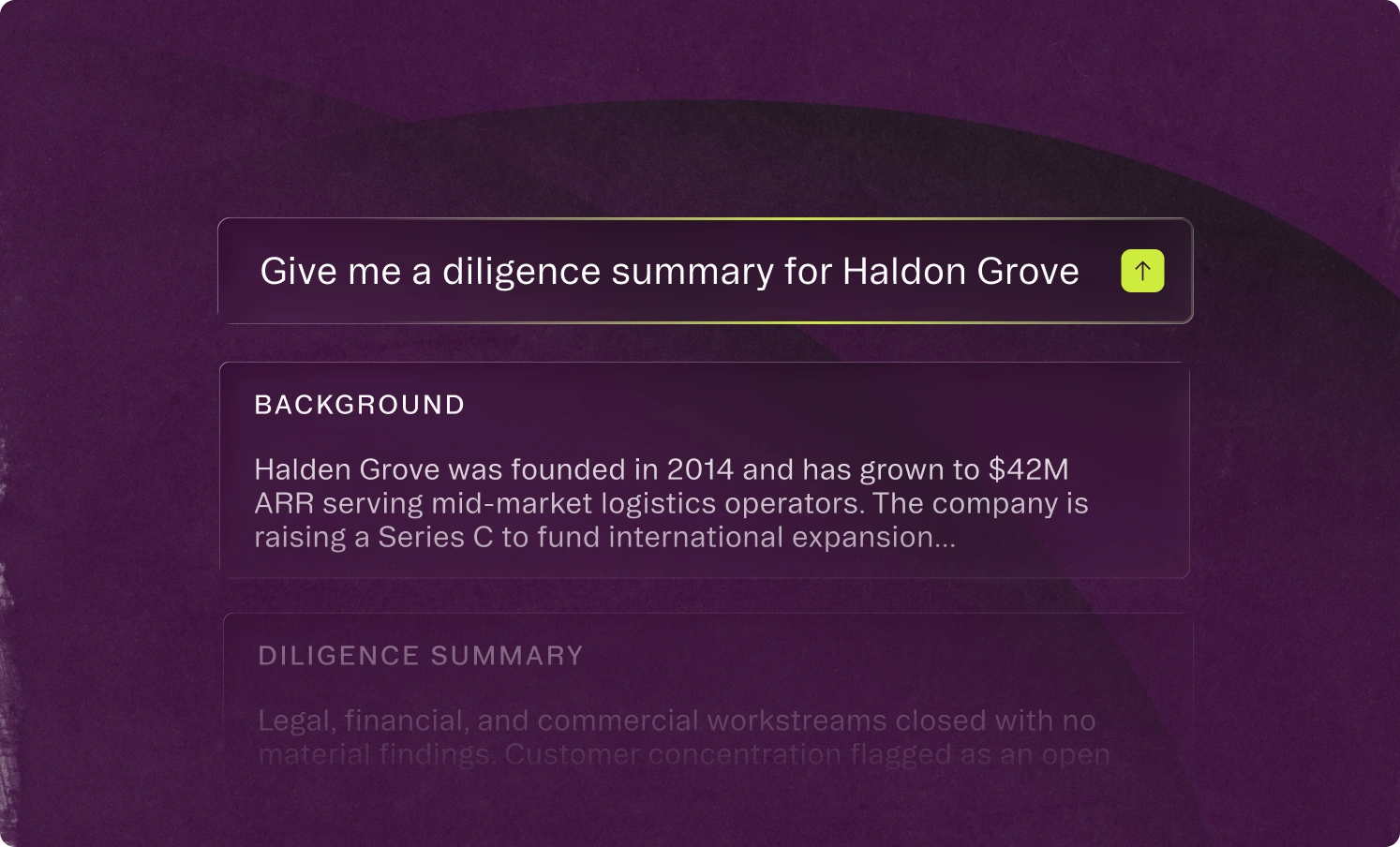
Armira
“The objective is not to automate investment judgment, but to automate everything surrounding it.”
– Niklas Krusche, Head of Origination & AI
Close your next win
Affinity tracks every stage change and next step automatically, and retains why deals moved or died, so nothing depends on one person's memory.
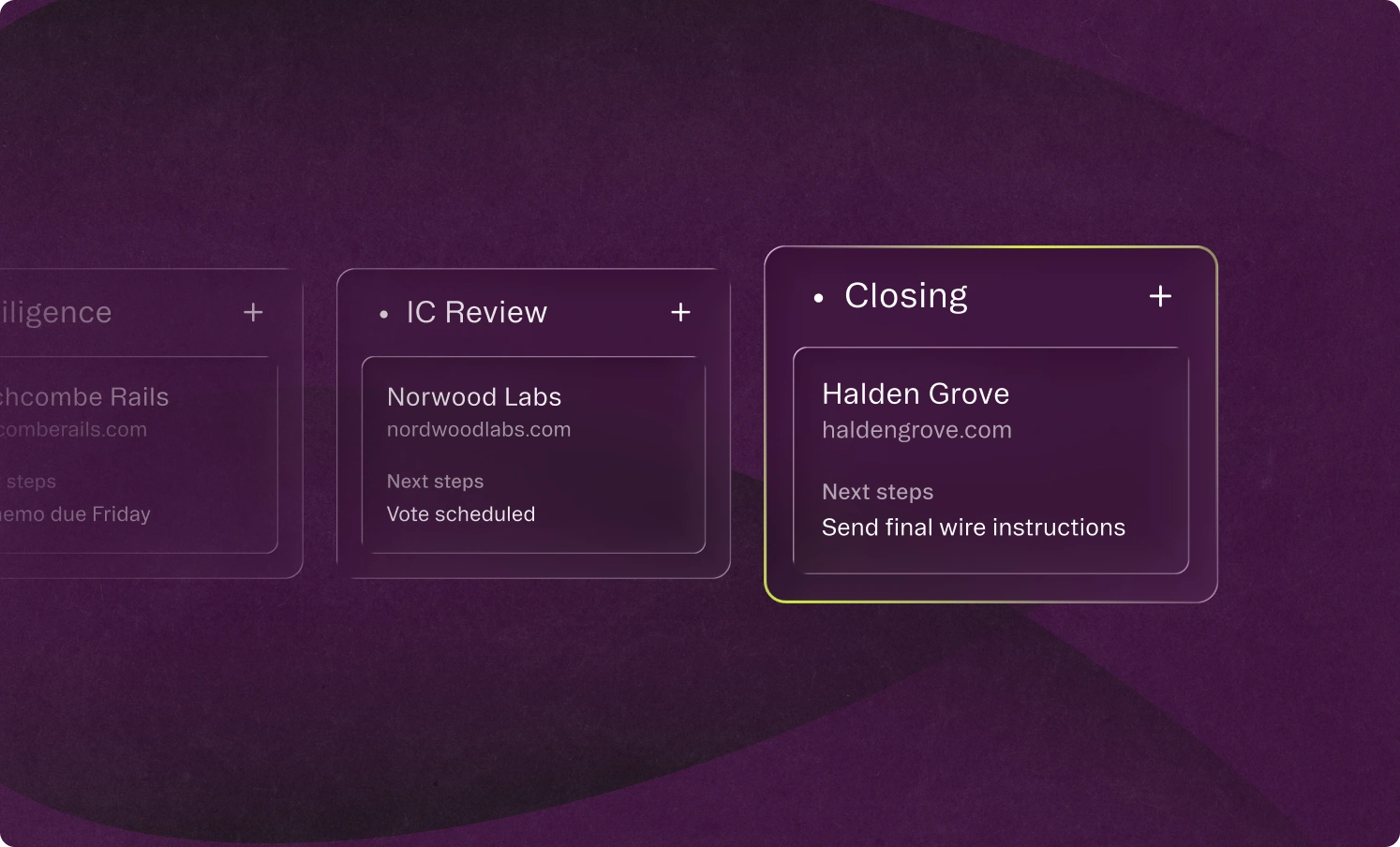
Seaside Equity
“We’ve won a good amount of deals that we wouldn’t have won if we hadn’t changed over to Affinity.”
– Doug Parker, Head of Origination
Identify problems before the Board does
Affinity tracks portfolio milestones, flags a company that's gone quiet, and surfaces follow-on signals, so problems and opportunities show up between board meetings instead of in them.
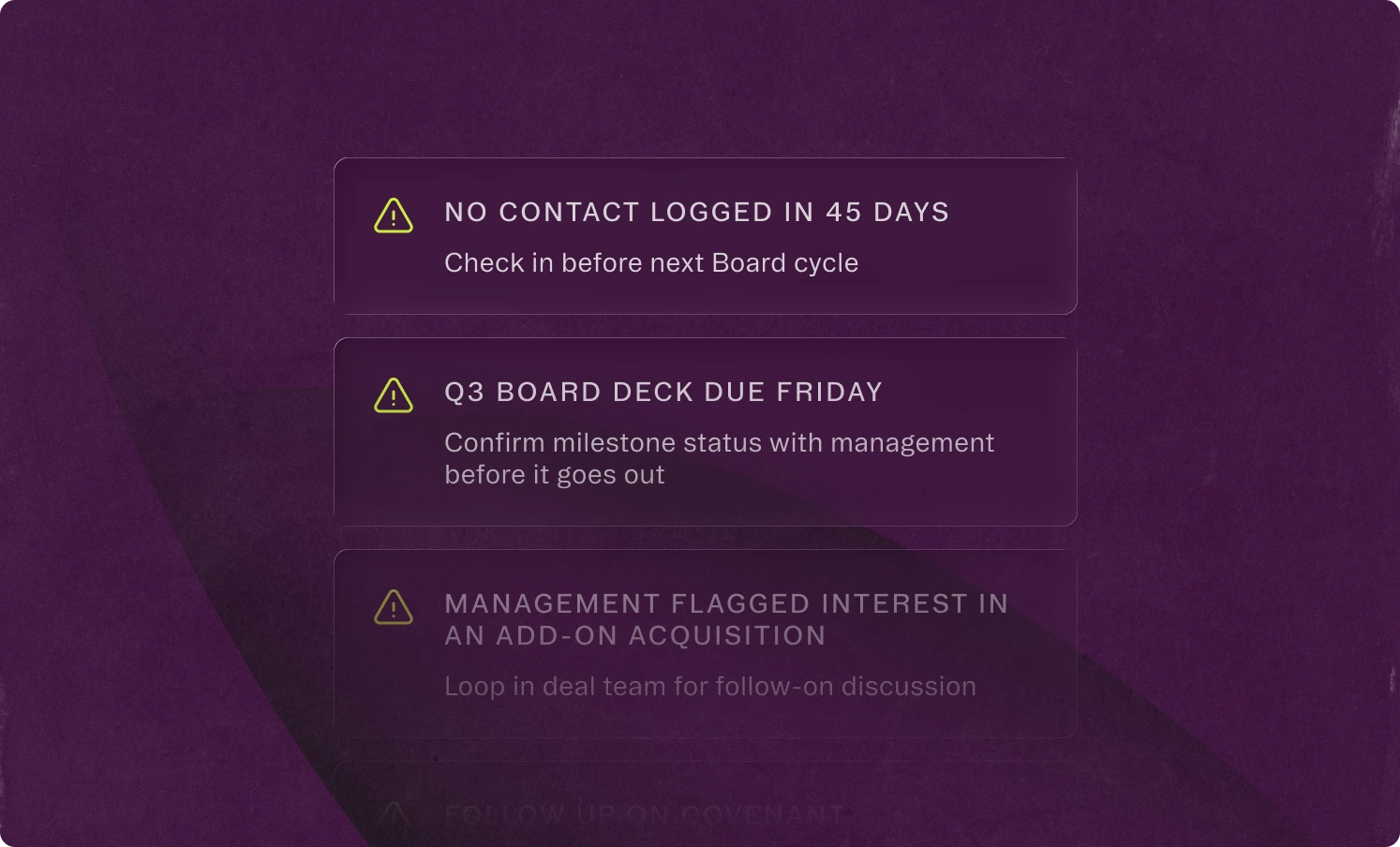
Learn more about how top private equity firms build strategic LP relationships
Find the right LPs and exit timing
Affinity maps likely buyers, tracks every LP touchpoint, and flags relationships that need attention, so capital raises and exits run on relationship data instead of guesswork.
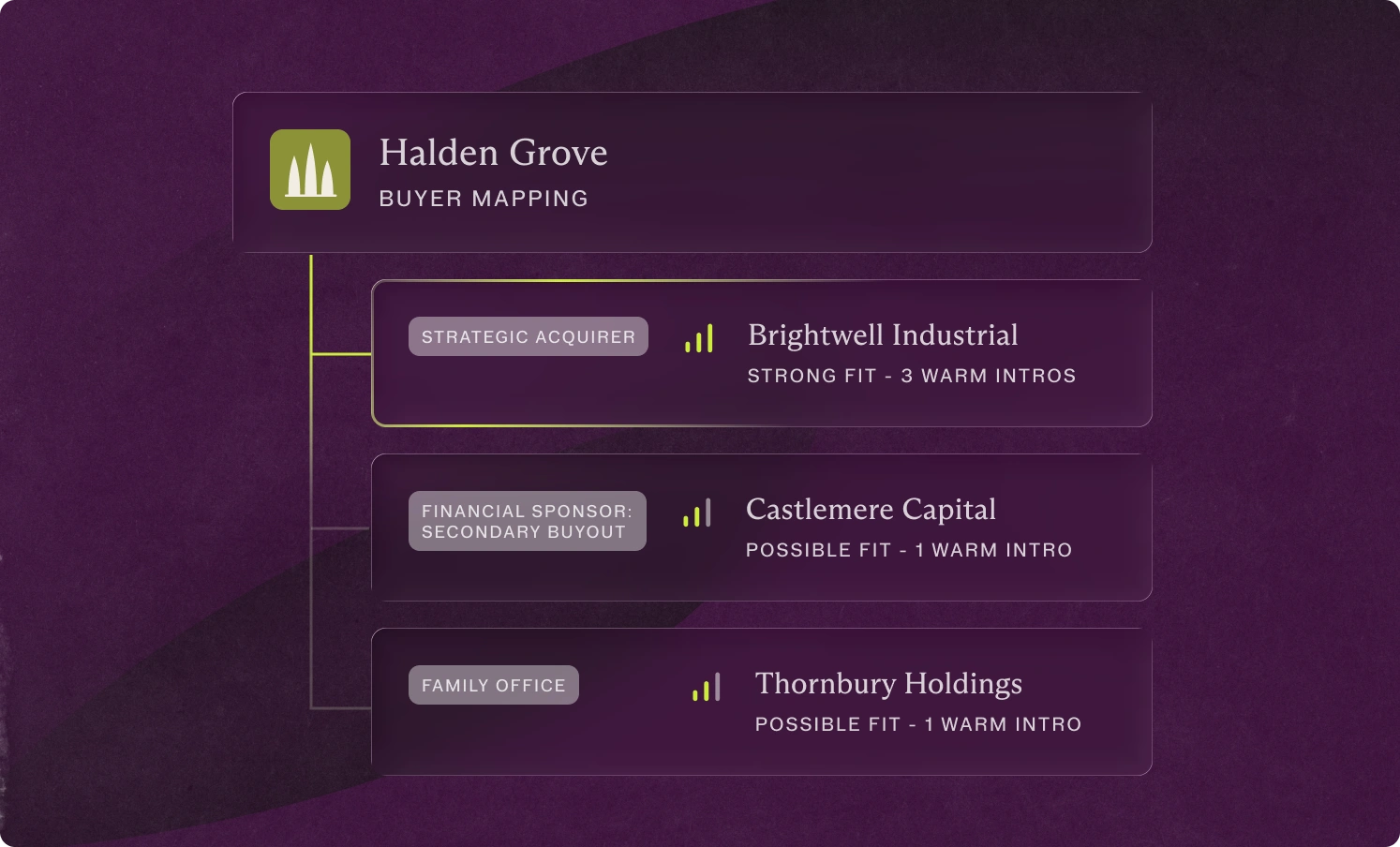
Capital Formation
Capital Formation’s M&A advisors, industry experts and broader relationship networks all sit within the same ecosystem, alongside event planning and coordination.
Built for the way your firm works
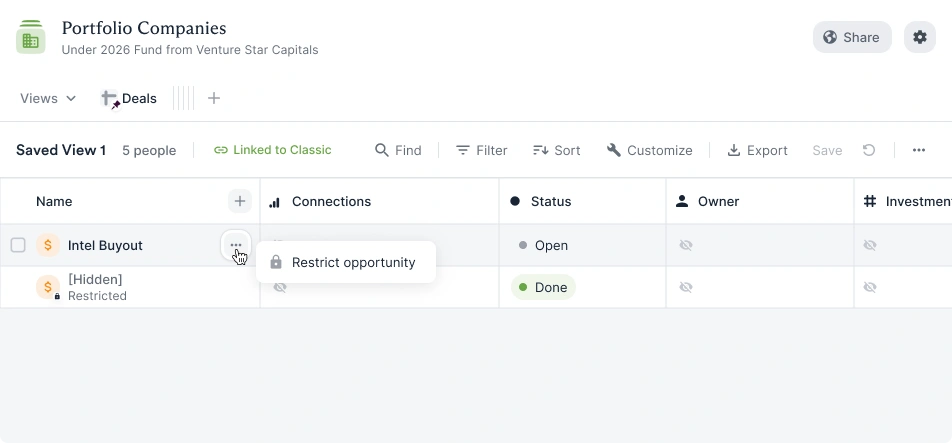
Deal-level privacy
Restrict a deal to a per-deal allow list for MNPI and public-to-private processes. Everyone else sees that a deal exists, nothing else.

Team-based permissions
Silo notes, files, and lists by fund, strategy, or team. The relationship network stays visible everywhere, so coverage never disappears behind a permissions wall.
Open by default
Affinity’s MCP connects to Claude, ChatGPT, and Snowflake without a custom integration project.
.webp)






Switching CRMs shouldn’t mean starting over
Most firms are live in under 45 days, without a data team, a training curriculum, or months spent deciding how the CRM should be structured before anyone can start using it.
Automated from day one
No user has to log anything. The relationship graph builds itself off email and calendar the moment they're connected, so your firm's network maps automatically within the first 24 hours. Partners get value immediately, without changing how they work.
Permissions built in, not retrofitted
Fund-level and deal-level access, restricted opportunities, allow lists, configured to how your firm actually operates during onboarding, not bolted on later after something's already gone wrong.
Nothing to design before you can start
Generic CRMs make you decide how deals, relationships, and records should be structured before anyone can onboard. Affinity's data model is already built for a deal team, so day one is spent using it, not designing it.

Privacy without a workaround
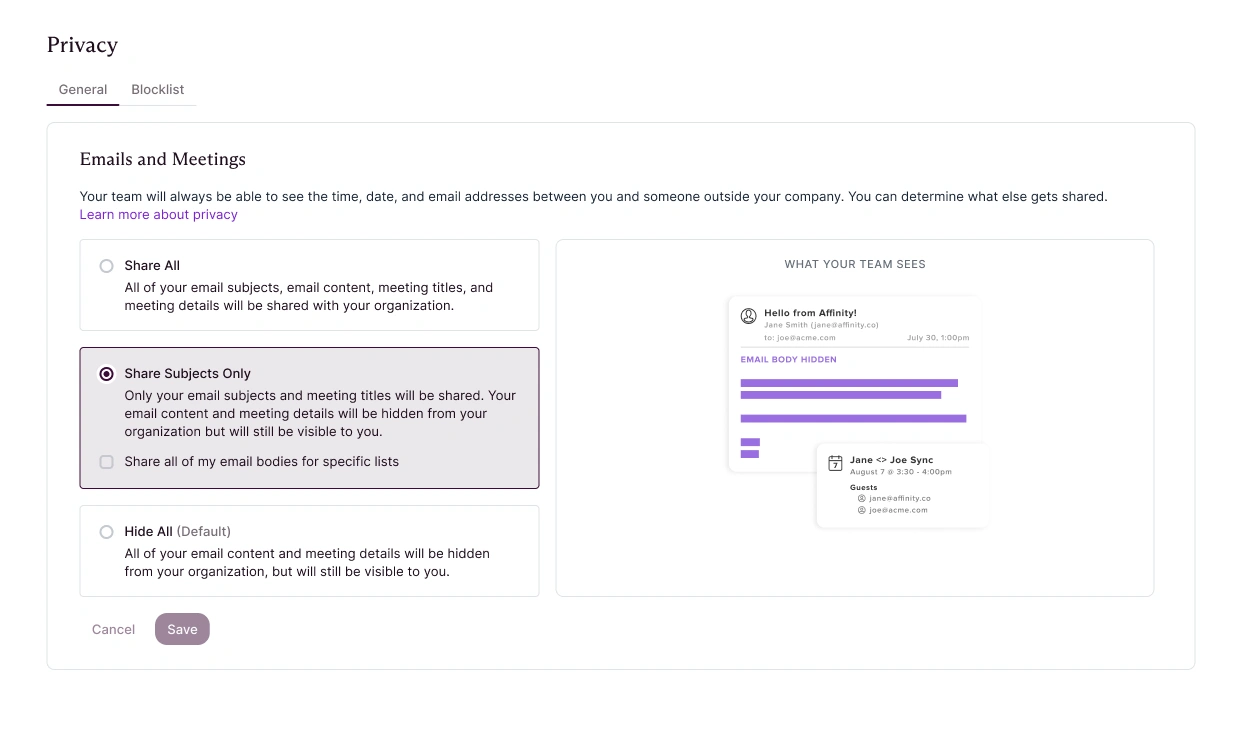
Selective Sync lets senior partners exclude specific meetings or emails while everything else keeps syncing, so the firm gets the intelligence it needs without anyone feeling watched.
A dedicated onboarding contact, not a ticket queue
Someone who understands private capital works with your team to make the CRM match how your firm wants to operate, not the workflow you got stuck with on day one.
How hard are your relationships actually working for you?
Affinity’s PE Benchmark Report is unique because it benchmarks firms based on relationships—those proprietary paths to assets, intermediaries, and buyers only your firm possesses. Find out how hard your firm is actually working and how effective your network actually is.
What PE firms ask before switching
A private equity CRM is a system of record organized around firms, funds, and deals rather than sales accounts. It tracks intermediary and banker coverage, holds a company record across a multi-year hold period, enforces deal-level confidentiality between teams, and reports activity to LPs. Sales CRMs model none of this, which is why most firms adapting one end up rebuilding it or switching.
Proprietary dealflow comes from relationships built long before a company runs a process, with founders, operators, bankers, and prior management teams. Firms that source well track those relationships as firm assets rather than individual ones, so coverage survives turnover. The practical test is whether a deal team can see, in seconds, who at the firm already knows a target.
Banker coverage breaks when it lives in one professional's inbox. Tracking it properly means recording every interaction across the firm, scoring each relationship by how recently and how often the team communicates, and flagging when a key relationship goes quiet. Done automatically, coverage stays current without anyone maintaining a spreadsheet of who owns which bank.
Diligence generates documents, notes, and third-party workstreams that outlive the people who created them. Firms that handle it well keep the diligence record attached to the deal rather than in a folder tree, so a decision can be reconstructed years later. The CRM's job is to hold the trail. It doesn't replace the data room.
Migration has two halves: moving structured records, and rebuilding the relationship history that made the old system useful. The first is a data import. The second is where most migrations lose value. Systems that reconstruct the relationship graph from the firm's own email and calendar history regenerate that context directly, rather than importing it from the outgoing CRM.
Affinity's data model, deal-level privacy, and multi-fund permissions are used by PE buyout firms managing everything from single-fund deals to multi-strategy platforms. While the workflows are configured differently for PE than VC, the underlying platform is the same one both run on.
Deal-level permissions let you set a per-deal allow list. Everyone outside it sees a masked pipeline entry, not deal detail, so MNPI and public-to-private processes stay compliant without a separate tool. Admins configure the list themselves, and every access is recorded in an audit trail.
Affinity takes the procedural work off the associate's plate. Ascend agents assemble meeting briefs from CRM and enrichment data beforehand, capture deal signals during the meeting, and propose CRM field updates afterward for review. What stays with the associate is the judgment: evaluating opportunities, building relationships, and running process. Deal teams recover 180+ hours per person annually.
Put your firm’s network to work