Best Private Equity CRM Software: A 2026 Buyer's Guide


In private equity, your firm's relationships are its real proprietary asset, and the CRM you run them on decides whether that asset compounds or quietly decays in someone's inbox. Choosing the right one has become a competitive decision in its own right. This guide covers what makes a private equity CRM different from a generic sales tool, the criteria that actually matter when you evaluate platforms, and how the leading options stack up.
Why private equity firms need a purpose-built CRM
Most CRMs were designed for sales teams running linear pipelines: lead to demo to close. That model breaks in private equity, where a single relationship can span a decade and touch multiple funds, portfolio companies, and co-investors before it ever leads to a deal.
When PE firms adopt generic CRMs like Salesforce or HubSpot, three problems surface immediately:
Manual data entry kills adoption. Firms that previously ran generic CRMs consistently report low adoption on those legacy tools. When investment professionals spend their time logging calls and updating records instead of sourcing deals, they stop using the system. Your CRM becomes an expensive address book no one trusts.
Relationship context disappears. Generic CRMs track accounts and opportunities. They don't understand that the same banker who introduced a deal in Fund III also has a relationship with your operating partner from a previous firm. Without a relationship graph built from actual communication data, your firm's collective network stays locked in individual inboxes.
Deal-level privacy doesn't exist. PE firms manage multiple funds with different LPs, co-investment rights, and information barriers. Generic CRMs weren't built for multi-fund structures, deal-level permissions, or the compliance requirements that come with institutional capital.
The fix is to choose a CRM built for the way private equity works. That means automatic data capture instead of manual entry, a relationship graph instead of a contact database, and workflows designed for dealflow rather than sales funnels.

What to look for in a private equity CRM
Every PE CRM vendor will claim their platform is purpose-built. Here's how to evaluate those claims against what matters for an investment team.
Relationship intelligence and network visibility
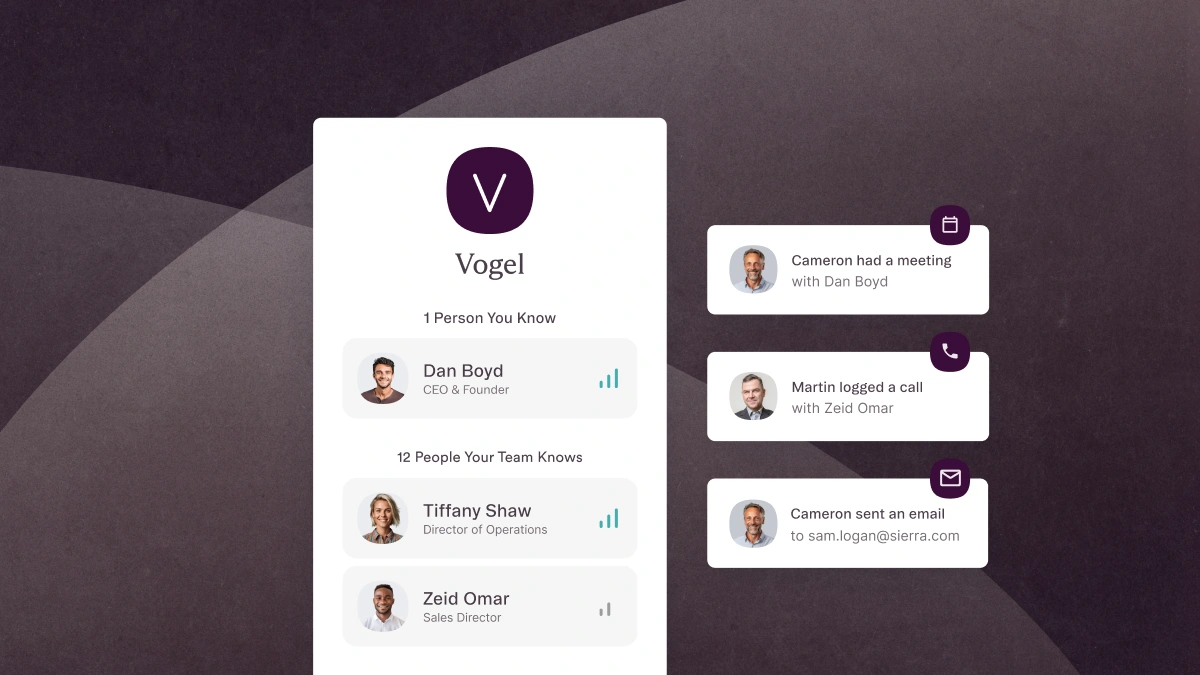
Your CRM should automatically map who at your firm knows whom, across every email, meeting, and calendar event, and score those relationships based on recency and frequency of interaction. This is the difference between discovering a warm introduction path to a target company's CEO and cold-emailing through a generic outreach sequence.
Look for: AI that analyzes communication patterns to reveal the strongest connection between your firm and any given contact, then surfaces those paths when you're evaluating a deal.
Automatic data capture
If your investment professionals have to manually log interactions, your CRM will fail. Every deployment study on generic tools confirms it. The best private equity CRMs capture email and calendar data automatically, creating and updating contact and company records without anyone lifting a finger.
Look for: firmwide email and calendar sync that runs continuously, not a browser extension that requires individual opt-in.
PE-specific pipeline and dealflow management
Dealflow in private equity doesn't follow a linear funnel. A company you pass on in 2024 might become your best deal in 2027. Your CRM should support multi-stage, non-linear pipelines with configurable deal stages, sector tags, and relationship tracking that persists across funds, so a target you passed on in one cycle resurfaces with its full history intact when the timing is right.
Multi-fund structures and deal-level permissions
If your firm manages multiple funds, or co-invests with LPs who have information rights, your CRM needs granular access controls at the deal level, so you can maintain information barriers between funds, honor LP information rights, and keep sensitive deal data visible only to the team that should see it. This isn't a feature you can bolt onto a generic CRM after the fact.
Data enrichment from 40+ sources
Manual research on target companies is a time sink. A purpose-built PE CRM should enrich company and contact records automatically from third-party data sources (firmographics, funding history, leadership changes, and more) so your team works from current information without the research overhead.
Integrations with your existing tech stack
Your CRM doesn't operate in isolation. It needs to connect with the tools your firm already uses: email (Outlook, Gmail), data providers (PitchBook, Crunchbase), AI tools like Claude and ChatGPT, communication platforms, and internal systems. Evaluate how deep the integrations go. Does data flow both ways, or is it a one-directional export? Two-way sync means you maintain a record once and trust it everywhere, instead of reconciling the same contact across three systems.
Enterprise security
PE firms handle material non-public information. Your CRM must support SOC 2 Type II compliance, GDPR, CCPA, and role-based access controls, the baseline that lets you protect that information and clear the security review every institutional LP runs before committing. If a vendor can't produce a current SOC 2 report, move on.
Time to value and deployment speed
This is where many evaluations go wrong. A CRM that takes 6–12 months to implement and requires outside consultants to configure is a CRM that won't deliver value this year. Ask every vendor: how long from contract signature to firm-wide adoption? What does onboarding look like? Who handles data migration?
The best private equity CRM platforms compared
Not every CRM that markets to private equity is built for it. The platforms below are the ones PE firms evaluate most often. The table compares them on the criteria from the last section, and the breakdowns that follow explain where each one fits best.
| Platform | PE-native | Relationship intelligence | Deployment | Data capture | Best for |
|---|---|---|---|---|---|
| Affinity | Yes | Relationship intelligence scores strength and surfaces intro paths | FastUnder 60 days | AutomaticFirmwide | PE, VC, and growth equity firms of all sizes |
| DealCloud (Intapp) | Yes | Limited pattern matching, primarily rule-based workflows | Slow6 to 12 months | ManualManual entry primary | Large institutional firms with dedicated ops |
| 4Degrees | Yes | Generates some relationship suggestions | Moderate2 to 4 months | PartialPartial automation | Small PE and VC teams wanting basic automation |
| Dynamo Software | Partial | Limited | Moderate3 to 6 months | ManualManual entry primary | Multi-asset-class fund administrators |
| Attio | No | Connection-strength scoring, general-purpose rather than private-capital-specific | Fast1 to 2 months | AutomaticEmail and calendar sync | Early-stage teams wanting a lightweight CRM |
| Meridian | Yes | Claims AI surfaces dealflow insights natively | Varies | PartialPartial automation | Firms willing to bet on an unproven platform |
Affinity
Affinity is the AI-first private capital CRM, purpose-built for private capital rather than adapted from sales software. It differentiates through relationship intelligence, the AI layer that analyzes firmwide communication data to score relationship strength, map the collective network, and surface the strongest introduction paths to any target. The platform captures every email and calendar interaction automatically, enriches records from 40+ data sources, and deploys firm-wide in under 60 days.
The proof points speak to what PE firms care about. Invus Opportunities covers 40% more deals with the same team. For Motive Partners, the gain showed up in throughput: 66% more deals reviewed each year. MassMutual Ventures points to speed, triaging opportunities 5x faster. Affinity serves 3,300+ private capital firms, and adoption runs high: Munich Re Ventures reports 96% firmwide usage every month, and firms like BDev Ventures and FoW Partners reach 100% without mandating it.
Affinity’s PE-specific workflows, including multi-fund pipeline management, deal-level permissions, banker relationship tracking, and portfolio company oversight, are built for the full investment lifecycle, from sourcing through portfolio value creation. Firms like Invus and Seaside Equity Partners are proof.
DealCloud (Intapp)
DealCloud offers a comprehensive feature set for PE firms, including configurable deal pipelines, reporting, and fundraising modules. Where it falls short is time to value: deployments typically take 6–12 months and often require external consultants to configure. The platform depends heavily on manual data entry, which contributes to adoption challenges at firms without dedicated CRM operations staff.
Best for: firms with the budget and internal resources to manage a multi-quarter implementation.
Compare Affinity and DealCloud
4Degrees
4Degrees targets PE and VC firms with some AI-driven relationship suggestions and a deal pipeline tool. The platform offers partial automation for data capture, but integrations are limited compared to more established platforms, and firms frequently cite a clunky user experience as a barrier to team-wide adoption.
Best for: smaller PE or VC teams looking for basic relationship-aware CRM functionality.
Dynamo Software
Dynamo is a broad asset management operations platform where CRM is one module among many, including fund accounting, investor portal, and compliance. That breadth comes at the cost of depth, as Dynamo's CRM capabilities don't match purpose-built alternatives for dealflow management or relationship intelligence. Data capture is primarily manual.
Best for: multi-asset-class firms that need a single platform spanning fund administration and investor relations, with CRM as a secondary requirement.
Attio
Attio (formerly Fundstack) is a lightweight, modern CRM rebuilt from the ground up. It offers clean design, automatic email and calendar sync, and connection-strength scoring that weights the recency and frequency of your team's interactions. Where it falls short for private equity is depth and context: its relationship signals and data enrichment aren't built around fund, deal, and LP structures, and its integrations with PE-specific data providers are limited. Affinity's differentiation is the depth of its relationship graph and private-capital data model, not the mere presence of a relationship score.
Best for: early-stage firms or small teams that need a straightforward CRM and aren't yet ready for a full PE workflow platform.
Meridian
Meridian is a newer entrant positioning itself as an AI-native CRM for investment teams. The platform makes ambitious claims about AI that manages dealflow discovery, but with a small customer base and limited track record, it's difficult to evaluate those claims against real-world PE workflows across diverse fund sizes and strategies. Firms considering Meridian should ask for reference customers in their fund size and strategy.
Best for: firms comfortable adopting an unproven platform with the expectation that capabilities will mature.
Why 330+ PE buyout teams choose Affinity as their private equity CRM
The choice between CRM platforms often comes down to a difference in approach: does the system depend on your team entering data manually, or does it capture and organize that data automatically?
Affinity takes the second approach. By syncing firmwide email and calendar data automatically, Affinity builds a living relationship graph that your entire team can search, filter, and act on, without anyone logging a single call or updating a contact record. Relationship intelligence then layers AI on top of that graph to score each connection by strength and surface the introduction paths that matter, flagging when a key relationship goes quiet.
The difference shows up in the numbers:
- 96–100% firmwide adoption at firms like Munich Re Ventures, BDev Ventures, and FoW Partners, because a CRM that doesn't require manual entry is one teams keep using
- 180+ hours saved per person annually, time redirected from data entry to sourcing and closing deals
- Firm-wide deployment in under 60 days, against the multi-quarter implementation timelines typical of legacy platforms
Named results tell the same story:
- Invus Opportunities covers 40% more deals after moving to Affinity
- Motive Partners saw a 66% increase in deals reviewed annually
- Seaside Equity Partners closed 15+ platform and add-on deals since implementing Affinity, with 10 more under exclusivity
- Pear Ventures converted 11,467 introduction paths across its portfolio through Relationship Intelligence
- Future Planet Capital grew their pipeline by 395%
Each of these is a measured outcome from a firm that made the switch.

How to deploy a private equity CRM in under 60 days
Implementation pain is the number-one objection PE firms raise when evaluating a new CRM, and for good reason. Many have lived through 6–12 month deployments that burned budget, drained team morale, and still resulted in a tool no one wanted to use.
Affinity's deployment model is built to counter that experience.
Week 1–2: data migration and configuration
Affinity's team handles the migration of your existing data (contacts, companies, deals, and historical pipeline) from your current system. Whether you're coming from spreadsheets, Salesforce, DealCloud, or another CRM, the migration process is standardized and doesn't require outside consultants.
Week 2–4: firmwide sync and network visibility
Once email and calendar sync is enabled, Affinity begins building your relationship graph automatically. Within 24 hours, your team has visibility into the firm's collective network: who knows whom, how strong those relationships are, and where the best introduction paths exist. No manual entry required.
Week 4–6: team onboarding and workflow configuration
Affinity's onboarding process is designed for investment professionals who have learned to be skeptical of new tools. Training focuses on the workflows that matter: dealflow management, relationship mapping, and pipeline reporting. Custom views, deal stages, and access controls are configured to match how your firm works.
Week 6–8: integration and optimization
Connect Affinity to your existing tech stack (LLM, email, data providers, communication platforms, and internal systems) through pre-built integrations and Affinity's MCP server, the most powerful in private capital. Fine-tune reporting dashboards and pipeline views based on how your team uses the platform in practice.
The result is firm-wide adoption in under 60 days. At firms like Munich Re Ventures, that shows up as 96% monthly usage and higher, driven by a deployment model that eliminates the manual entry that kills adoption at other platforms.
Conclusion
Choosing a private equity CRM comes down to one question: will your team actually use it? The platforms that depend on manual data entry rarely get consistent use. The firms that switch to automatic data capture and relationship intelligence, where the CRM builds and maintains the relationship graph without anyone logging a call, see the kind of adoption Munich Re Ventures reports—96% firmwide every month, along with measurably better outcomes across sourcing, dealflow management, and portfolio oversight.
Affinity is the AI-first private capital CRM that 3,300+ firms trust to run their investment lifecycle, from first introduction to portfolio value creation. If your current system requires more work than it saves, it's time to evaluate the alternative.
With Affinity Ascend, agents like Meeting Prep, Data Update, and Warm Intro handle pre-meeting research, CRM updates, and intro paths, with your team approving every change. Affinity's MCP server brings the same data into Claude, ChatGPT, Gemini, Microsoft Copilot, and Notion.
Private equity CRM: frequently asked questions
What is a private equity CRM?
A private equity CRM is a customer relationship management platform designed for the specific workflows of PE firms: sourcing and managing dealflow, tracking multi-year relationships with founders, bankers, and co-investors, managing portfolio companies, and maintaining LP relationships across multiple funds. Unlike generic sales CRMs built for linear sales funnels, a PE CRM handles non-linear deal cycles, multi-fund structures, and deal-level privacy requirements.
What CRM do most PE firms use?
Many PE firms have historically used Salesforce with custom configurations, DealCloud, or spreadsheets. Increasingly, firms are moving to purpose-built alternatives like Affinity that offer automatic data capture and relationship intelligence, AI that scores relationship strength and surfaces warm introduction paths. Affinity is used by 3,300+ private capital firms, including Invus Opportunities, Motive Partners, and MassMutual Ventures.
What is the difference between a CRM and deal management software?
A CRM manages relationships. This includes the people, companies, and interactions that form the foundation of your firm's network. Deal management software tracks the pipeline: stages, terms, milestones, and approvals. The best private equity CRMs combine both, connecting relationship data to deal data so your team can see where a deal stands and who at your firm has the strongest relationship to move it forward.
How does relationship intelligence work in a PE CRM?
Relationship intelligence reads firmwide email and calendar data to surface the strongest introduction path to any target contact or company, scoring each connection by how recent and frequent the contact has been. In Affinity, this happens automatically, with no manual entry or tagging required. The result is a living relationship graph your entire team can search and act on.
Can a CRM replace spreadsheets for deal tracking?
Yes, and firms that make the switch consistently report better outcomes. Spreadsheets lack relationship context, multi-user collaboration, automatic data capture, and the ability to link deal data to interaction history. Affinity replaces the spreadsheet-and-inbox workflow with a centralized system where dealflow, relationship data, and pipeline reporting live together. Kapor Capital, for example, consolidated four separate tools into Affinity.
How long does it take to implement a PE CRM?
It depends on the platform. Legacy platforms like DealCloud often take 6–12 months and require external consultants. Affinity deploys firm-wide in under 60 days, including data migration, email and calendar sync, team onboarding, and workflow configuration. Within 24 hours of enabling sync, your firm has visibility into its collective relationship graph.
What CRM security features do private equity firms need?
PE firms handle material non-public information and must maintain information barriers between funds. At minimum, your CRM should support SOC 2 Type II compliance, GDPR, CCPA, role-based access controls, deal-level permissions, and multi-fund data segregation. Affinity provides enterprise-grade security with granular access controls designed for the compliance requirements of institutional private capital.
Can a CRM serve both PE and private credit teams?
Yes, if the platform is built for multi-strategy firms. Private credit teams share many of the same relationship-driven workflows as PE teams: sourcing through intermediary networks, tracking multi-year relationships, and managing fund-level data separation. Affinity supports both PE and private credit workflows within a single platform, with configurable pipelines and access controls for each team.
What is the best CRM for private equity deal sourcing?
The most effective CRM for deal sourcing is one that combines automatic data capture with relationship intelligence. Manual-entry CRMs miss the relationship context that drives proprietary dealflow: who at your firm has the strongest connection to a target company, which bankers are most active in your sector, and where warm introduction paths exist that your team hasn't discovered. Affinity surfaces these insights automatically, which is why firms like MassMutual Ventures report discovering and triaging opportunities 5x faster.
How do PE firms track warm introductions across their network?
Most firms don't, at least not consistently. Warm introductions typically happen through individual relationships and are tracked informally, if at all. Affinity changes this by analyzing firmwide communication data to identify who at your firm has the strongest relationship with any given contact, then surfacing those introduction paths directly in the CRM. Pear Ventures converted 11,467 introduction paths across its portfolio through Affinity's Relationship Intelligence, turning what was once an ad-hoc process into a repeatable advantage.