The Ultimate Guide to AI in VC and PE
AI has become foundational to how venture capital and private equity firms operate. This guide explores how leading investors are applying AI to transform deal sourcing, streamline due diligence, and scale portfolio value creation. Featuring insights from BlackRock, OpenAI, and top private capital leaders, it reveals how relationship intelligence and data-driven workflows are redefining investment excellence.
- Learn how AI is reshaping deal sourcing, due diligence, and portfolio support
- See how firms use signal detection and relationship intelligence to find opportunities faster
- Explore real examples from BlackRock, OpenAI, and leading private capital firms
- Get a framework for building a secure, scalable AI-powered investment stack


"Implementation was really easy. We were able to start using the platform straight away."


"Having a well-defined, clean, golden source data set is more important in the age of AI. That's a lot of the benefit we're seeing from Affinity."


"It's night and day. We are way more organized when it comes to relationships. We've won a good amount of deals we wouldn't have won if we hadn't changed over to Affinity."


"Venture capital is a craft, and Affinity is one of the tools helping the investment team build this craft better."

The Ultimate Guide to AI in VC and PE


The private capital landscape has reached an inflection point. With 46% of investors citing competition as the biggest factor impacting deal flow in 2026, and 82% now using AI to accelerate company research, AI has evolved from experimental tech to competitive necessity.
In this guide, we’ll explore how AI creates tangible competitive advantages across every stage of the investment lifecycle, from uncovering proprietary deal opportunities to accelerating due diligence to scaling portfolio support.
Drawing from insights from BlackRock, OpenAI, and leading private capital firms, we examine the practical applications, adoption patterns, and strategic implementations that are redefining what's possible in private capital.
The AI Transformation
The conversation around AI in private capital has shifted. What began as experimental pilot programs are now core operational capabilities. As David Hefter from BlackRock notes, "There's been a real shift in AI's capabilities in 2025, particularly with reasoning models and tool calling. You can now use AI for deep research early on to determine if something is worth taking a look at."

This evolution is creating a new category of firms: AI-augmented investors. Data from leading industry reports shows that 94% of investors expect augmented approaches — where AI enhances human decision-making — to dominate the future of venture capital, up from 75% in 2024.
The "Knowledge Blackout" Phenomenon
Perhaps the strongest signal of AI's business impact is what OpenAI's Rohan Sahai calls the "knowledge blackout" — when AI systems go down and teams lose access to capabilities they've become dependent on. This dependency isn't weakness; it's evidence that AI has become genuinely valuable infrastructure.
The most successful firms are experiencing this dependency across three key areas:
- Deal sourcing acceleration: AI now enables broader market scanning without proportional resource increases
- Research depth: Teams can conduct more thorough analysis in compressed timeframes
- Decision support: AI provides critical analysis that challenges assumptions and surfaces risks
AI's Competitive Advantage Across the Investment Lifecycle
1. Deal Sourcing and Market Intelligence
Traditional deal sourcing relied heavily on networks, conferences, and manual research. AI is now shaping the future of deal origination into a more systematic, data-driven process while preserving the relationship advantages that define private capital success.
Leading firms use AI to identify investment opportunities before they become widely known. This involves:
- Signal detection algorithms that monitor hiring velocity, web traffic patterns, leadership changes, and capital efficiency metrics
- Market mapping capabilities that automatically identify emerging companies and competitive landscapes
- Thesis alignment scoring that filters opportunities based on investment criteria and strategic fit
As Sahai observes, "There's definitely something to how people are adopting AI itself. Some companies are scaling to 100 million ARR with half the people that that required in 2010 — like Cursor, Eleven Labs, and Midjourney — incredible companies with extremely lean teams."
In short, with AI at the deal sourcing stage, firms shift from reactive deal flow to proactive, high-confidence, scaled sourcing.
{{estimate-your-savings-plum="/rt-components"}}
2. Due Diligence with AI-Powered Context
Due diligence represents perhaps the highest-impact application of AI in private capital. With 46% of investors spending over 40 hours researching a single deal, AI's ability to synthesize information and provide rapid analysis creates significant competitive advantages.
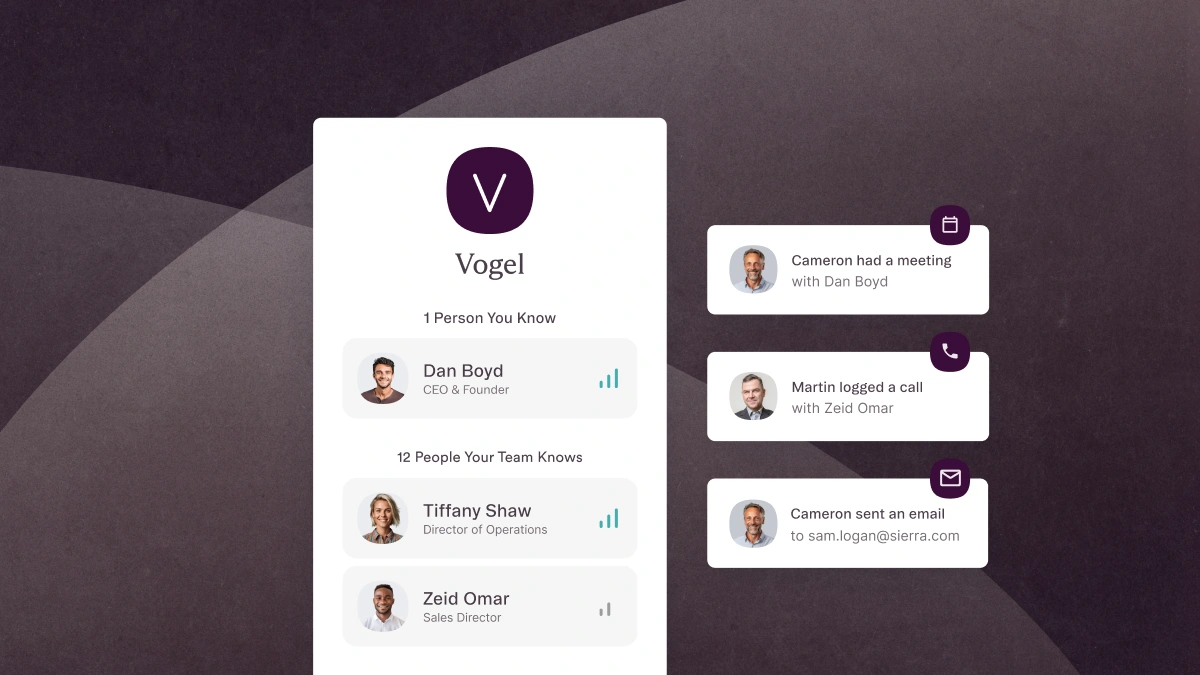
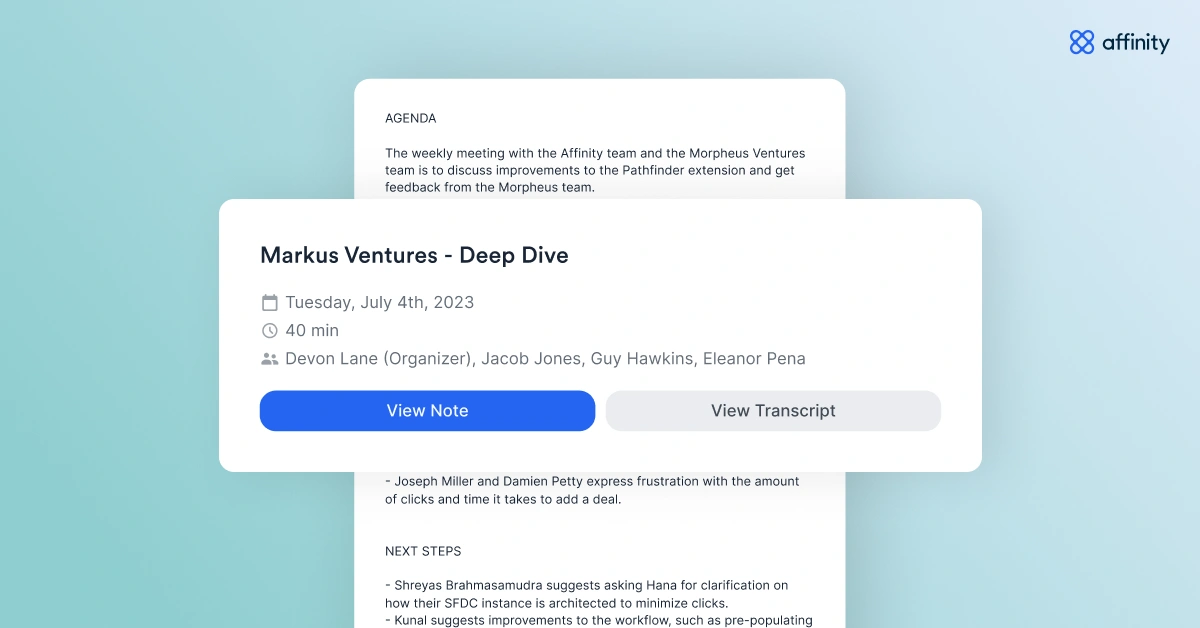
Modern AI systems automatically capture and log every meeting, email, and introduction, providing complete relationship context before deeper engagement. This eliminates blind follow-ups and ensures teams understand relationship strength with key contacts.
With AI summaries of notes, files, and transcripts, teams can:
- Quickly analyze company risks and competitive positioning
- Review founder backgrounds and team dynamics
- Surface key data points like ARR, headcount, and growth metrics
- Generate investment memos and presentation materials
Hefter explains, "AI gets you from information to action faster than your competitors. There's a real advantage to having immediate access to synthesized insights."
3. Scaling Portfolio Support with AI
Finally, portfolio support has emerged as a key differentiator for top-performing firms. At this stage, AI enables systematic value creation that goes beyond traditional ad-hoc assistance.
Leading firms use AI to leverage their networks for portfolio company benefit, including:
- Automated introduction matching between portfolio companies and potential customers, partners, or talent
- Pipeline tracking for portfolio support activities
- Dashboard visualization of network engagement and value creation
AI-powered analytics help firms demonstrate measurable value to both portfolio companies and LPs through custom dashboard creation, for example, with enriched funding and growth data. They can also automate reporting that tracks portfolio performance and milestones.
In short, AI enables predictive insights about portfolio company trajectories. Firms can be smarter about supporting their portfolios with appropriate guidance at the right time.
Current Adoption Patterns and Industry Trends
The Regulated Industry Paradox
An interesting pattern emerges in regulated industries like private capital. While adoption is initially slower due to compliance requirements, the eventual integration becomes more "sticky."
As Sahai notes, "Once regulated industries adopt, they tend to have very sticky usage because of unique data shapes and established workflows that AI can uniquely address."
This suggests that firms investing early in proper AI implementation — including security, compliance, and integration considerations — will benefit from more durable competitive advantages.
The "Vibe Coding" Era
According to Sai, Y Combinator reports that 95% of code lines in their recent winter 2025 batch were written by large language models. This "vibe coding" trend represents a shift in how companies build and scale technology products.
For private capital firms, this trend creates investment opportunities in companies achieving dramatic efficiency gains, but also raises the bar for internal technology capabilities. Firms that don't leverage AI risk being out-built by portfolio companies that do.
Infrastructure vs. Application
The most successful AI implementations in private capital focus on infrastructure rather than standalone applications. This means:
- CRM-centered approaches where AI enhances existing workflows rather than creating new ones
- Integration-first strategies that connect AI capabilities across the entire technology stack
- Data foundation investments that enable AI to provide accurate insights
{{request-demo-short="/rt-components"}}
Implementation Strategy: Building Your AI-Powered Stack
Start with Relationship Intelligence
The most effective AI implementations in private capital begin with an AI-first private capital CRM that serves as the foundation for additional capabilities. This approach provides:
- Automated activity capture that eliminates manual CRM updates
- Relationship mapping that reveals introduction paths and network opportunities
- Activity tracking that provides complete context for all interactions
Layer in Specialized AI Capabilities
Once foundational relationship intelligence is established, firms can add specialized AI tools for:
- Signal detection
- Market research and competitive analysis
- Document analysis and deal memo generation
- Portfolio monitoring and performance tracking
- LP communication and fundraising support
Measure and Improve
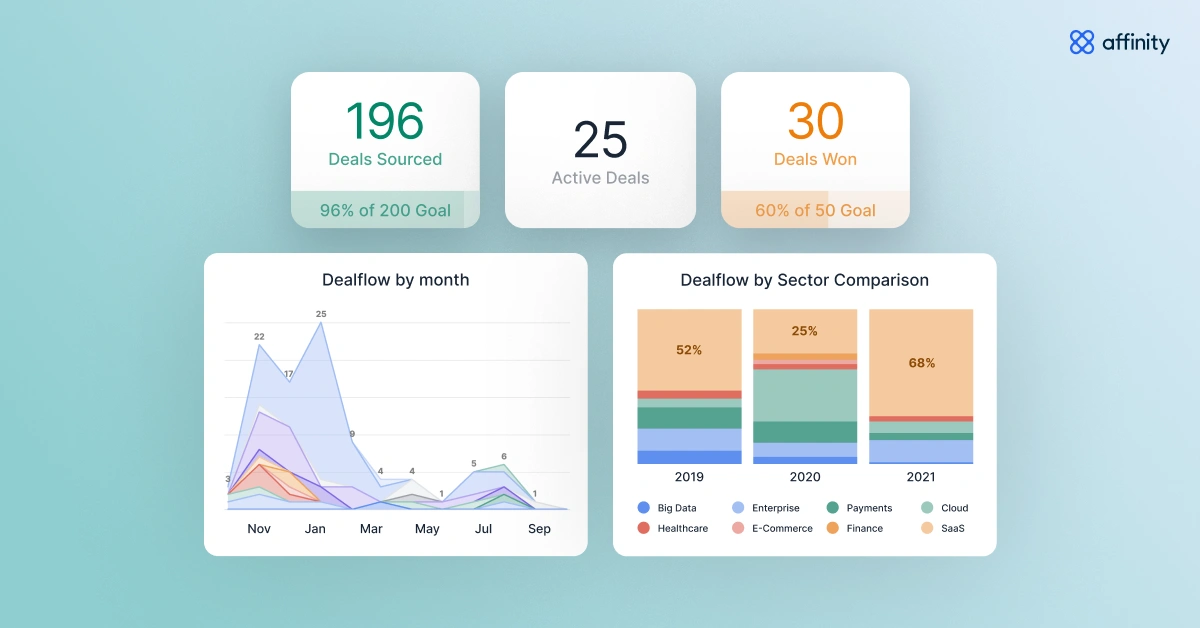
Measure and improve with tools like Affinity Analytics, with dashboards for things like funnel tracking, team activity, intro counts, and deal velocity. Smart dashboards also reveal performance by individual contributors, show where intro-to-meeting rates may be dropping, and hotspot deals or teams that need support.
Ensure Enterprise-Grade Security and Compliance
Given the sensitive nature of private capital data, successful AI implementations require:
- SOC 2, ISO27001, and GDPR compliance
- Enterprise-grade encryption and data protection
- Clear data governance and usage policies
- Regular security audits and assessments
The Imperative for Action
The path forward requires:
- Strategic vision that sees AI as infrastructure, not experiment
- Thoughtful implementation that enhances rather than replaces human judgment
- Continuous evolution as AI capabilities advance and market dynamics shift
The key lies in combining AI's analytical power with private capital's relationship-driven strategy. This approach will define the next generation of investment excellence.
Affinity is the AI-first private capital CRM that’s purpose-built for private equity. Affinity captures relationship intelligence, provides customizable deal workflows that match PE processes, and integrates with the tools that dealmakers rely on daily. Affinity Ascend, the agent platform built for private capital, adds agents for Meeting Prep, Data Update, and Warm Intro, with your team reviewing every update before it is applied. Affinity’s MCP server brings your firm’s relationship and deal data into AI tools like Claude, ChatGPT, Gemini, and Microsoft Copilot. To put AI to work across your whole deal cycle, request a demo today.