A dealmaker's guide to choosing deal sourcing platforms


Deal sourcing drives your pipeline and fuels your firm's growth. The more you can streamline your deal sourcing efforts, the more effectively you can find the right opportunities and the faster you can drive them across the finish line.
Firms face increased pressure to deploy capital and stricter investment criteria, so sourcing high-quality deals that strategically fit your thesis is critical to your firm's success. In Affinity's Private Capital Predictions 2026 survey, 50% of investors ranked new deal sourcing as their top priority for 2026.
Relying on siloed spreadsheets and LP rolodexes just isn't enough anymore. You need deal sourcing software that's designed to support the entire deal lifecycle and accelerate complex, longer-burning deals.
In this deal sourcing platform buyer's guide, you'll learn how the right technology keeps your firm ahead of the competition, how it can streamline the deal process, and features of some of the leading deal sourcing platforms for dealmakers.
Key takeaways
- Deal sourcing platforms are essential tools for private capital dealmakers.
- Firms should prioritize platforms that offer relationship intelligence, opportunity monitoring, growth signals, pipeline management, and automated data entry.
- Affinity supports deal sourcing through relationship intelligence and integrations with data providers like PitchBook, Grata, and SourceScrub.
How the right deal sourcing platform gives your investment team a leg up
Sourcing the right opportunities can be one of the most challenging parts of dealmaking. It's an important first step that shapes the rest of the dealmaking process. By combining automation, data, and relationship intelligence, deal sourcing software helps your team make more informed deal decisions and act on opportunities faster.
Data analytics and market insights help firms turn deal signals into deal sources. Modern deal sourcing software improves dealflow by helping you identify promising opportunities faster. Relationship intelligence that uses AI on enriched data sets also surfaces the warmest path to an introduction.
Let's take a deeper look at how deal sourcing software can help venture capital and private equity teams win better deals.
Benefits of deal sourcing software for venture capital
Few deals make it across the finish line: Building Ventures evaluates 8,000 companies and closes 4–5 deals a year. With multiple firms vying for the top deals, the right software can be a sourcing differentiator for VC firms.
- Relationship insights can help venture capital firms bridge new connections that open the door to new potential deals, based on existing connections.
- With many VC deals coming from within a firm's network, sourcing software can help dealmakers stay on top of every relationship to get into deals faster.
- Company and key contact insights help surface signals that indicate emerging fundraising and investment opportunities. Speedinvest saw a 30%+ increase in coverage of future Series A rounds.
- Find, engage, and prioritize a high number of opportunities more efficiently based on investment thesis and criteria.
For a full playbook, read the deal sourcing guide for venture capital.
Benefits of deal sourcing software for private equity
Deal sourcing software is a core part of the private equity tech stack and helps private equity firms target outreach activities more precisely.
- Create deal alerts that flag opportunities based on acquisition preferences and broadcast buy-side mandates.
- Enrich contact and company data, and research key stakeholders and portfolio companies so they can gain an edge when it comes time to identify quality opportunities.
- Maintain a complete deal history for streamlined due diligence.
Seaside Equity Partners has closed 15+ platform and add-on deals since implementing Affinity, and Invus Opportunities saw a 40% increase in deals covered vs. previous CRMs. For more, read the deal sourcing guide for private equity.
"It's night and day. We are way more organized when it comes to relationships—everyone is on the same page. We've won a good amount of deals that we wouldn't have won if we hadn't changed over to Affinity." — Doug Parker, Head of Origination, Seaside Equity Partners
What to look for in a deal sourcing platform
Adapting workflows to new software can be a heavy lift for busy deal teams. Adoption and buy-in are key to success, reinforcing the need for deal sourcing platforms that are purpose-built for private capital and solve blockers for dealmakers.
Look for features and functionality that help your deal teams with the following workflows:
Find new paths to deals using relationship intelligence
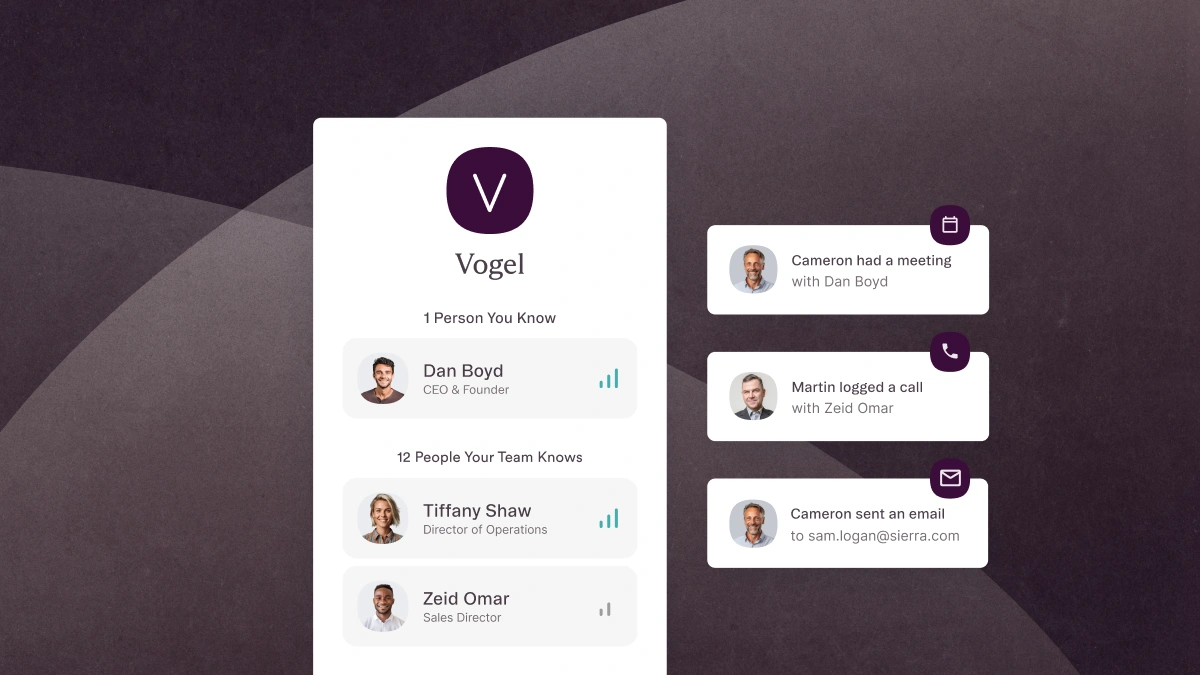
Your firm's existing network can be a well of opportunities. Look for software that helps your deal team assess their professional relationships and the relationships across your firm's network. This helps dealmakers uncover warm introductions to high-potential companies to build new relationships and win more deals.
Relationship intelligence can also help your team track and manage the contacts they're already connected with. Ideally, your deal sourcing software has automations that capture and centralize your firm's network without manual effort.
"We've started to use Affinity Pathfinder on websites and LinkedIn, and it's very valuable. It's easy for somebody to go to a website and see who we know without having to go to Affinity and look it up." — Caroline Haun, Operations Director, 8VC
Discover emerging trends to surface relevant opportunities
Accessing top deals can be competitive. Getting outreach timing right can be the difference between a missed opportunity and a closed deal. Look for deal sourcing software that enriches your existing data with growth signals from the data providers you already use and centralizes sourcing insights, so you can uncover the best deals first and engage right when momentum picks up.
Make sure company data and relationships live in one place
Data platforms tell you which companies to pursue, and relationship intelligence tells you who at your firm can get you in, so look for a CRM that keeps both in one place.
A CRM that pulls data from the providers you already pay for, such as PitchBook, Grata, SourceScrub, Harmonic, Dealroom, and Crunchbase, puts it in the same record as your firm's relationship graph. Affinity enriches every company and contact record from dozens of data sources, and its Dealroom integration is one example of how that data lands next to your network.
"We like that Affinity is built for the private capital markets. Because of its views and integrations with CrunchBase, Dealroom, and PitchBook, we can pull data into a central repository, filter for it, and track the companies that we're aware of in a way that allows us to see value across our firm." — Charlie Rexford, Chief of Staff, Sapphire Ventures
Use AI that takes on the procedural work
AI improves deal sourcing when it takes over the procedural work around a deal, from ranking introduction paths to drafting the outreach. Research is where the hours go: over half of investors spend 21+ hours a week on deal research, according to Affinity's Private Capital Predictions 2026 survey.
Look for AI that works inside your CRM and in the tools your team already uses. In Affinity Ascend, Warm Intro ranks the paths into a target company and drafts the outreach for you to send, and Meeting Prep briefs you before each meeting. AI Chat in Affinity answers questions about your pipeline and network, and Affinity's MCP server brings the same data into Claude, ChatGPT, Gemini, and Microsoft Copilot, so your team can ask about the pipeline without leaving the tool it's working in.
Stay on top of every deal without chasing updates
Deal sourcing is just the first step to a closed deal. Look for a deal sourcing platform that includes intuitive pipeline management tools with flexible workflows. Your team should know the status of every deal, have progress metrics at hand, and be able to capture every interaction and activity, without leaving your deal sourcing software.
Software designed for private capital firms often includes pipeline management features that simplify deal management from origination to close. Even better if it integrates directly with your CRM.
Save hours of manual data entry with automation
Your deal team's time is best spent building relationships and shepherding deals, not on manual data entry. Alpha Venture Partners saves 100+ hours per week collectively in manual data entry, which works out to 180+ hours per person annually.
Look for automated data capture features that capture and enrich data without manual effort, and provide actionable insights that can accelerate dealmaking.
6 top deal sourcing platforms for dealmakers (2026)
The list pairs Affinity, a CRM, with five data platforms that find companies and can sit alongside a CRM.
Affinity
Affinity is the AI-first private capital CRM that turns relationship intelligence into action. For deal sourcing, it maps who your firm knows and brings your data providers into the same place.
Affinity Ascend, the agent platform built for private capital, puts agents to work alongside your team. Warm Intro ranks introduction paths and drafts outreach for you to review and send, and Meeting Prep delivers a brief before every meeting. Affinity's MCP server also brings your firm's relationship and deal data into Claude, ChatGPT, Gemini, Microsoft Copilot, and other tools your team already uses.
For private capital firms, the deal origination process is complex, the cycle can be long, and relationships make all the difference. Affinity draws on the strength of every relationship in your firm's network and enriched investment data to find, monitor, and engage high-potential deals more effectively. See how Affinity supports deal sourcing.
Key features
- Automatic relationship capture and strength scoring: Affinity captures every email and calendar interaction without manual entry, so relationship scores reflect actual communication history.
- Warm introduction paths: Affinity analyzes your team's network and all the data points within it to surface the warmest introduction paths. Before a sourcing call, your team can see who at the firm has been in contact with the target's management and how recently.
- Affinity Ascend agents: Warm Intro and Meeting Prep take outreach drafting and meeting briefs off the deal team.
- AI Chat: Ask questions about your pipeline and network and get answers from your firm's own data.
- Data enrichment from dozens of sources: Company and contact records are enriched from sources including Affinity Data, PitchBook, Grata, SourceScrub, Harmonic, Dealroom, and Crunchbase, so a company's profile and your firm's history with it sit in one record.
- Industry Insights: Affinity company profiles use AI to surface information about competing and related companies, which cuts the research time that sourcing and due diligence require.
- Pathfinder Chrome extension: See who at your firm knows a company or person while you browse websites and LinkedIn.
- MCP server: Ask about your Affinity data from the AI assistant your team already uses, without switching tools.
Pros
- Built for private capital workflows: Affinity is purpose-built for private capital firms. Product and support teams understand the nuances of private capital dealmaking, and features are designed to reduce inefficiencies across sourcing, relationship tracking, and pipeline management.
- Sourcing, relationships, and pipeline in one CRM: Data from dozens of sources, including PitchBook, Grata, and SourceScrub, lands next to your firm's relationship graph.
- Open platform: Affinity captures activity from Gmail and Outlook, connects to your data providers, and brings relationship and deal data into your AI assistants through its MCP server.
- Fast to deploy: BDC Capital saw a 5-fold increase in organizations and contacts tracked within 24 hours of deployment, and MassMutual Ventures implemented Affinity in less than 60 days with full integration.
- Results in sourcing: MassMutual Ventures is 5x faster at discovering and triaging investment opportunities.
Cons
- Affinity relies on integrations for third-party company universe data, so firms that want a built-in company database need a data provider subscription, such as PitchBook.
Best for
Affinity is best for firms that want relationship-led sourcing with their data providers in one place.
SourceScrub
SourceScrub is a deal sourcing data platform that Datasite acquired in August 2025. It was originally built to address a gap in bootstrapped and founder-funded data for investors, and it supports a wide range of investment deal teams.
Key features
- Conference tracking and planning for in-person deal sourcing.
- Expert-in-the-loop machine learning recommends high-potential opportunities.
- Multi-source verified deal data for better deal sourcing.
Pros
- Custom scoring model allows for custom algorithms for company scoring and ranking.
- Browser extension brings SourceScrub data where you work.
Cons
- Built for broader deal teams, from consultants to corporate development, with fewer private capital-specific features.
- No native CRM functionality, requiring additional software. Integrates with Affinity, so firms can bring its data into the same place as their relationships.
Best for
SourceScrub is best for early-stage and growth-stage investment firms, as well as private equity and M&A.
Grata
Grata is an AI-native private market intelligence platform that Datasite acquired in 2025.
Key features
- AI search combines public and proprietary data for unified deal insights.
- Dynamic search engine continuously indexes websites to discover new companies.
- Live Deal Network provides real-time access to active deals.
Pros
- Similar search functionality helps identify deals that match ones in your pipeline.
- Web search functionality means sourcing insights go beyond existing firm and proprietary data.
Cons
- Lack of native CRM functionality means you need additional CRM software. Integrates with Affinity, so firms can bring its data into the same place as their relationships.
- Limited relationship insights to identify warm outreach opportunities.
Best for
Grata is best for deal teams that prioritize industry insights and ML research in their deal sourcing.
Harmonic
Harmonic is a startup database designed to help venture capital firms discover early-stage companies and opportunities.
Key features
- A growing database of startups and founders.
- Scout AI agent handles sourcing, evaluation, and natural language research.
- Real-time alerts help stay on top of the latest updates for target companies.
- Syncs connections and communications across your team.
Pros
- Purpose-built for venture capitalists.
- APIs to connect with your existing tech stack.
Cons
- Extensive developer support is required for several APIs and integrations.
- No native CRM functionality, so relationship and pipeline management live in a separate system. Integrates with Affinity, so firms can bring its data into the same place as their relationships.
Best for
Harmonic is best for venture capital firms sourcing early-stage startups.
Synaptic
Synaptic is a data intelligence platform for venture capital and private equity investors.
Key features
- Startup discovery and analysis for data-driven deal decisions.
- Growth signal monitoring to track companies over time.
- Founder search to find founders early.
- AI search that finds companies by investment thesis.
Pros
- Search by thesis helps teams find companies that fit their criteria.
Cons
- No native CRM functionality, so firms need a separate system for relationships and pipeline.
Best for
Synaptic is best for investment teams that need startup data and growth signals to support deal sourcing efforts.
Specter
Specter is a deal sourcing software that uses live data and AI analysis to help private market investors make stronger deal decisions.
Key features
- Talent and HR signal tracking for additional company insights.
- Datasets for companies, people, investors, and transactions.
- Network tracking for better visibility and relationship mapping.
Pros
- Integrations with a large number of apps in common dealmaking tech stacks.
- Pushes companies, people, and investors into six CRMs, including Affinity.
Cons
- No relationship data to support relationship-driven deal sourcing.
Best for
Specter is best for teams focusing on private market opportunities, particularly early and growth-stage opportunities.
Make your deal sourcing software a differentiator
Deal sourcing is the foundation of your firm's success. Your software should be more than a database. It needs to help you find and engage quality opportunities at the right time.
Affinity, the AI-first private capital CRM, is trusted by 3,300+ private capital firms, with 40% VC market share. It maps who your firm knows, brings your data providers into the same record, and uses Ascend agents to rank warm introduction paths and draft outreach.
Request a demo to see how Affinity finds the warm path into the companies your data providers surface, or explore the deal sourcing workflow.
Deal sourcing platform FAQs
What is a deal sourcing platform?
A deal sourcing platform is a software that helps deal teams uncover opportunities and deals that match their investment criteria. They often include features and insights to help dealmakers find, engage, and prioritize deal opportunities, such as relationship intelligence, data enrichment and growth signals, custom deal algorithms, and targeted watch lists.
Affinity, the AI-first private capital CRM, combines your firm's network with proprietary and third-party data to surface opportunities that match your thesis and show who can get you in. For a deeper definition, read the guide to deal sourcing.
What's the difference between a deal sourcing platform and a CRM?
A deal sourcing platform finds companies that match your criteria, while a CRM records and activates your firm's relationships and pipeline. Data platforms such as Grata, SourceScrub, and Harmonic tell you what to pursue. A private capital CRM like Affinity shows who at your firm can get you in and tracks the deal from first touch to close. The two work together: Affinity integrates with these providers, so their data sits next to your relationship graph.
How does AI improve deal sourcing?
AI improves deal sourcing by taking on the procedural work around a deal: researching companies, ranking introduction paths, drafting outreach, and preparing meeting briefs. In Affinity, the Warm Intro agent ranks introduction paths and drafts outreach for your review, the Meeting Prep agent briefs you before each meeting, and AI Chat answers questions about your pipeline and network.
What are the best deal sourcing channels for dealmakers?
The best deal sourcing channels for dealmakers can include:
- Your firm's network and existing relationships.
- Conferences and industry events.
- Startup accelerators and incubators.
- Inbound dealflow through marketing and brand recognition.
- Portco referrals.
Every firm has different sourcing channels that drive success depending on their investment process and thesis. The best dealmakers can dive into their deal sourcing strategies to identify channels with the greatest potential for success.
What is deal origination?
Often used interchangeably with deal sourcing, deal origination is the process of identifying and activating new opportunities. Once a firm identifies an investment opportunity, deal origination is the first step for driving it into your pipeline. Read the ultimate guide to deal origination for the full process.
What are the benefits of deal sourcing software for investment banking?
Investment banking and M&A teams improve productivity and make better use of resources with deal sourcing software that captures relationships automatically, tracks pipeline, and surfaces warm paths to decision-makers.
- Automated data capture can help investment banking and M&A dealmakers free up time to focus on more impactful activities.
- Relationship intelligence can help dealmakers identify warm connections to founders, PE firms, and advisors who are close to upcoming transactions.
- Network insights and mapping help investment teams surface high-potential opportunities early by building strong relationships and positioning themselves as trusted advisors before a process formally begins.
- Increased access to company insights can help investors stay ahead of the competition, accessing M&A deals and opportunities first.