The best financial CRM software in 2026


Most CRMs marketed to financial firms are generic sales tools with a compliance module bolted on. The category that matters for relationship-driven firms is narrower than the marketing suggests, and the differences between platforms show up in two places: how the data gets in, and what the system does with it once it's there. This guide compares the leading options across private capital, wealth management, and advisory, with an honest read on where each one fits.
What a financial CRM is, and why generic CRMs fall short
A financial CRM organizes work around the people and firms a team already knows, the interactions that build trust over time, and the deals that follow. Generic CRMs were built for a different shape of work.
Salesforce, HubSpot, and Pipedrive are sales-funnel platforms. Prospects enter at the top, progress through stages, and convert at the bottom. Financial firms don't run that motion. A private equity partner cultivating a banker relationship for three years isn't moving a lead through a funnel. A wealth advisor managing three generations of a family is tracking decades of trust, not a sales cycle. Venture investors competing for allocation in a hot round have already skipped past discovery.
The work is relationship-driven, multi-fund, compliance-sensitive, and often spans decades. The CRM has to fit that shape, or professionals stop using it.
That last point determines almost everything else. The firms winning competitive deals in 2026 are the ones whose teams actually use the CRM, which means reducing manual work rather than adding to it. Most financial firms don't have a CRM problem. They have an adoption problem caused by the wrong CRM.
How to evaluate financial CRM software
Five questions separate the platforms that get used from the ones that get bought and ignored.
Does it capture data automatically, or rely on manual entry?
This is the single biggest predictor of CRM adoption in private capital. If professionals have to log every email, every meeting, every call, they won't. Adoption stalls, data degrades, and leadership loses visibility into the firm's network.
Look for a CRM with automatic activity capture that syncs firmwide email and calendar data without requiring individual action. Firms that capture data automatically see 96 to 100% adoption. Platforms that rely on manual entry rarely clear 40%.
Does it surface relationship paths, or just store contacts?
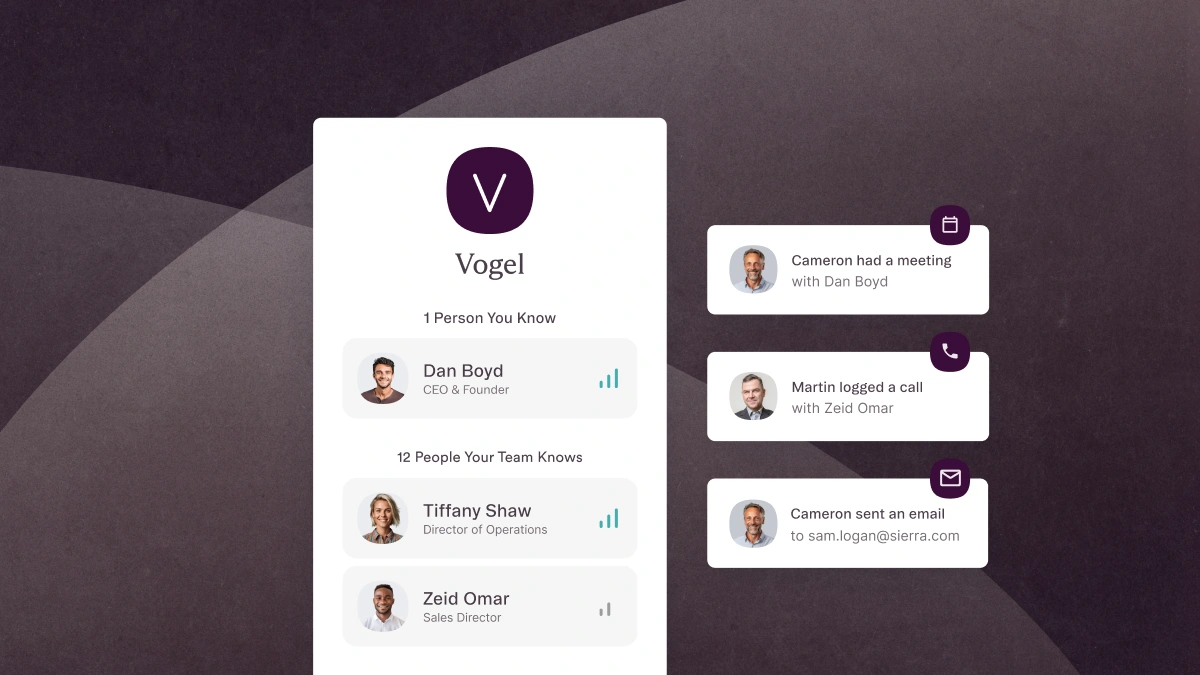
A static contact database isn't a financial CRM. The platforms worth evaluating reveal who in the firm has the warmest connection to a target, score relationship strength based on real interaction data, and map introduction paths through shared history that no one person could identify alone. The benefit is direct: warm introductions close more often than cold outreach, and the firm that identifies the path first usually gets the meeting.
This capability is what Affinity calls relationship intelligence. It turns a directory of contacts into a working map of who can open which doors. Some platforms offer a version of it, but most don't.
Does it deploy in weeks, or in a year?
Ask every vendor two questions: how long does deployment take, and what adoption rate do their customers actually achieve? Enterprise CRMs routinely require six to twelve months of customization, dedicated consultants, and change management programs. Most Affinity firms deploy firm-wide in under 60 days without any need for consultants.
The math on this is unforgiving. A six-month implementation that achieves 30% adoption has negative ROI from day one. A 60-day implementation with high adoption rates pays for itself before the first quarter closes.
Does it meet institutional compliance requirements?
A CRM that can't survive an audit isn't institutional infrastructure, no matter how good the relationship features are. The platform must support role-based access controls, deal-level privacy, audit trails, and data residency options. SOC 2 and ISO 27001 are table stakes for institutional use. If a vendor can't speak to its security posture in detail, that's the answer.
Does it integrate with the tools the team already runs?
A CRM that forces deal teams to copy-paste between tabs is a CRM that costs more than it saves. Financial CRMs have to connect to email and calendar, the major data providers (PitchBook, Preqin, Crunchbase), portfolio management systems, and LLMs that the team uses via MCP. Evaluate whether integrations are native or require middleware.
The top financial CRM platforms compared
Only one of the platforms below was built from the ground up for private capital. The rest were built for adjacent audiences and adapted. Here's how the leading options compare across the criteria that matter to relationship-driven firms.
| Affinity | Salesforce Financial Services Cloud | Redtail CRM | Wealthbox | DealCloud | Dynamo | HubSpot CRM | |
|---|---|---|---|---|---|---|---|
| Best for | Private capital firms (PE, VC, private credit, family offices) | Large enterprises with dedicated admin teams | Independent financial advisors | Small to mid-size RIA firms | Mid-market PE and real estate firms | Venture capital firms | Firms prioritizing marketing automation |
| Automatic data capture | Yes, firmwide email and calendar sync | Limited; requires third-party add-ons or manual entry | No | No | Partial; some automation available | No | No native financial data capture |
| Relationship intelligence | Yes, with AI that scores relationship strength and maps introduction paths | No native capability | No | No | Limited | Limited | No |
| Deployment | Under 60 days, no consultants | 6 to 12+ months with consultants | 2 to 4 weeks | 1 to 2 weeks | 3 to 6 months with consultants | 4 to 8 weeks | 2 to 4 weeks |
| Pricing | Per-seat subscription | Per-seat plus implementation | Per-database flat fee | Per-seat subscription | Per-seat subscription | Per-seat subscription | Freemium plus per-seat tiers |
Affinity
Affinity is the AI-first private capital CRM, built from the ground up for PE, VC, private credit, and family offices. Automatic activity capture syncs firmwide email and calendar interactions and enriches records from 40+ data sources, so deal teams don't spend their day logging activity. Relationship Intelligence scores connection strength across the firm and surfaces warm introduction paths that no one person could identify alone.
The proof shows up in the numbers. 3,300+ private capital firms run on Affinity, including 40% of the VC market. Most firms deploy firm-wide in under 60 days. Adoption reaches 96% firmwide at Munich Re Ventures and 100% at BDev Ventures and FOW Partners because the platform reduces manual work instead of adding to it. Deal teams save 180+ hours per person annually.
Best fit for private capital firms that need their CRM to reflect how relationships drive deals.
Salesforce Financial Services Cloud
Salesforce brings enterprise scale, a vast integration marketplace, and deep customization. For firms with dedicated Salesforce admins and established workflows, it offers flexibility that few platforms can match. The tradeoff: implementations run six to twelve months, require consulting partners, and adoption depends on how much manual entry can be eliminated through add-ons. There is no native relationship intelligence capability.
Best fit for large financial institutions with existing Salesforce infrastructure and dedicated admin resources.
Redtail CRM
Redtail is a long-established CRM for independent financial advisors, with a straightforward interface and flat per-database pricing that keeps costs predictable for small practices. It integrates with common financial planning tools but lacks automatic data capture, relationship mapping, and the multi-fund structures institutional firms require.
Best fit for solo advisors or small RIA practices managing client relationships at modest scale.
Wealthbox
Wealthbox offers a modern interface and fast setup for wealth management firms. It integrates with popular custodians and financial planning software, and per-seat pricing keeps it accessible for growing firms. However, it lacks automatic data capture and relationship intelligence, and its pipeline management isn't built for the multi-stage dealflow that PE or VC firms require.
Best fit for small to mid-size RIA firms that prioritize design and usability over advanced deal management.
DealCloud
DealCloud (an Intapp company) targets mid-market PE, real estate, and credit firms with configurable deal management workflows and reporting. It offers some automation but doesn't match the depth of automatic data capture or network mapping that purpose-built CRMs with relationship intelligence provide. Implementations typically require consulting support and take three to six months.
Best fit for mid-market PE and real estate firms that prioritize deal tracking customization over rapid time-to-value.
For a dedicated comparison of CRM options for real estate investors, see our complete guide to CRM software for real estate investors.
Dynamo
Dynamo is built specifically for venture capital, with features tailored to VC workflow: deal tracking, portfolio management, and LP reporting. It's a focused tool for a focused audience, but it lacks automatic data capture, deep relationship mapping, and the cross-asset flexibility multi-strategy firms need.
Best fit for VC firms that want a purpose-built tool for fund-level deal and portfolio management.
HubSpot CRM
HubSpot offers a free tier and strong marketing automation, making it an entry point for firms exploring CRM for the first time. It was built for inbound marketing and B2B sales, not for the relationship-driven, compliance-sensitive workflows of financial services. It lacks automatic data capture for financial interactions, has no relationship intelligence, and doesn't support deal-level privacy or multi-fund structures. Firms that outgrow HubSpot's financial services capabilities often migrate to purpose-built platforms once dealflow complexity demands it.
Best fit for firms that need lightweight contact management with marketing automation.
What sets Affinity apart for private capital
Most CRMs in financial services are adapted from tools built for other industries. Affinity was built from the foundation up for private capital.
Automatic activity capture syncs every email and calendar interaction across the entire firm. No manual logging, no incomplete records. Affinity creates and maintains a living record of the firm's network automatically, so professionals spend their time on deals.
Relationship Intelligence turns that data into action. Affinity scores connection strength across the firm's network and reveals who has the warmest path to a target CEO, LP, or co-investor. The relationship graph surfaces introduction paths the team didn't know existed, through shared work history, board relationships, and connections that only appear when the full firm's interaction data is analyzed.
Affinity Data layers firmographic, funding, and personnel data from 40+ sources onto every profile, giving teams context before the first meeting.
Affinity Ascend, the agent platform built for private capital, puts agents to work on that data: Meeting Prep delivers a pre-meeting brief automatically, Data Update suggests CRM field updates from meeting notes for a human to review and apply, and Warm Intro ranks intro paths and drafts outreach. Affinity's MCP server brings the same context into Claude, ChatGPT, Gemini, Microsoft Copilot, and Notion.
Financial CRM by firm type
The way relationships drive revenue looks different in a PE shop than in a venture firm, and different again in an investment bank or a family office. The CRM has to handle those differences without losing depth in any of them. Here's how a financial CRM serves each firm type, and where Affinity fits.
CRM for private equity firms
PE firms manage long hold periods, complex LP relationships, and multi-fund structures that generic CRMs weren't designed for. When a firm is running Fund III while still managing portfolio companies from Fund I, the CRM has to handle that complexity natively. A financial CRM built for PE supports deal-level privacy, tracks banker relationships over years-long cultivation cycles, and provides portfolio-level reporting across funds. Affinity's automatic activity capture and Relationship Intelligence give PE firms a view of their network that spreadsheets and Salesforce customizations can't match. Learn more about Affinity for private equity.
CRM for venture capital firms
VC firms evaluate thousands of companies a year and rely on network strength to win competitive rounds. Speed matters: the firm that identifies a warm introduction path first often gets the first meeting. When a Series B round opens and three firms are competing for allocation, the one with the warmest path to the founder wins. Affinity is trusted by 40% of the VC market because it surfaces those paths automatically, tracks dealflow across partners, and connects sourcing activity to outcomes. Learn more about Affinity for venture capital.
CRM for investment banks
Investment banking depends on coverage relationships built over years, sometimes decades. A managing director's relationship with a CEO may span multiple advisory engagements, and that institutional memory can't live in one person's inbox. A financial CRM for IB must track banker-to-client relationships across deal types, manage coverage teams, and maintain strict information barriers. Affinity's firmwide data capture ensures that relationship history doesn't walk out the door when a banker changes teams or leaves the firm. Learn more about Affinity for investment banking.
CRM for wealth management and advisory firms
Wealth management and advisory firms manage long-term client relationships where trust compounds over decades. A single advisor may manage relationships across three generations of a family, and the CRM has to capture that depth. A financial CRM should track every client interaction, support compliance documentation, and provide analytics that connect engagement to retention and AUM growth. Firms that rely on referral networks benefit from relationship intelligence that maps who in the firm has the strongest connection to a prospective client. Learn more about Affinity for asset management.
CRM for family offices
Family offices operate with lean teams and broad mandates: co-investments, direct deals, fund commitments, and philanthropic activity. A financial CRM for family offices has to be flexible enough to support diverse asset types while keeping sensitive data private. Affinity's straightforward deployment and automatic activity capture mean family office teams can run a firmwide CRM without dedicated operations staff. Learn more about Affinity for family offices.
Frequently asked questions about financial CRM
What is a financial CRM?
A financial CRM is a customer relationship management platform designed for financial services firms, including private equity, venture capital, investment banking, wealth management, and advisory practices. Affinity is the AI-first private capital CRM, purpose-built for PE, VC, private credit, and family offices, with automatic activity capture and Relationship Intelligence at its core. Generic CRMs were built for B2B sales teams and don't handle the relationship networks, multi-fund structures, or compliance requirements financial firms need. Categories like Redtail and Wealthbox serve independent advisors and small RIA practices, while platforms like Salesforce Financial Services Cloud target enterprise institutions with dedicated admin teams.
What is the best CRM for financial advisors?
It depends on the type of firm. Affinity features automatic activity capture, relationship intelligence, and deployment in under 60 days. Independent advisors and small RIA practices often start with tools like Redtail or Wealthbox, which offer straightforward interfaces and integrations with financial planning software. Firms already invested in Salesforce can add Affinity for Salesforce to bring Affinity's relationship intelligence and automatic activity capture into Salesforce. Compare options.
How much does a financial CRM cost?
Affinity uses per-seat subscription pricing without requiring consulting engagements for deployment; most firms go live firmwide in under 60 days. Pricing varies across the rest of the market. Free tiers (like HubSpot's) offer basic contact management but lack financial-specific features. Mid-market platforms like Wealthbox and Redtail typically charge $35 to $75 per seat per month or use flat database pricing. Enterprise platforms like Salesforce Financial Services Cloud and DealCloud involve per-seat licensing plus implementation costs that often exceed the software cost itself. When evaluating total cost, factor in implementation time, consulting fees, ongoing admin overhead, and the productivity cost of low adoption. A less expensive CRM that nobody uses costs more than a premium CRM that the entire firm adopts. Contact Affinity for current pricing details.
What's the difference between a generic CRM and a financial CRM?
A purpose-built private capital CRM is built around relationships and deals rather than a sales funnel. It supports multi-fund structures, deal-level privacy, banker relationship tracking, LP management, and the compliance workflows that institutional firms require. A generic CRM (Salesforce, HubSpot, Pipedrive) is built around prospects entering at the top of a funnel, progressing through stages, and converting at the bottom. The most significant difference is data capture: generic CRMs depend on manual entry, while Affinity, the AI-first private capital CRM, captures interaction data automatically across the firm.
How long does it take to implement a financial CRM?
Most firms deploy Affinity firmwide in under 60 days without consultants. Automatic activity capture populates the relationship graph from day one, and most firms see their network mapped within 24 hours of connecting email and calendar. Implementation timelines vary widely across the rest of the market. Lightweight tools like Wealthbox and Redtail can be set up in one to four weeks. Enterprise platforms like Salesforce Financial Services Cloud and DealCloud typically require three to twelve months with consulting support. Setup time matters less than adoption speed. A CRM that takes six months to implement and achieves 30% adoption has negative ROI from day one. Affinity customers like Munich Re Ventures (96% firmwide monthly) and BDev Ventures (100%) reach high adoption because the platform reduces manual work instead of adding to it.
What is Relationship Intelligence in CRM?
Relationship intelligence is the ability of a CRM to automatically map, analyze, and surface insights about a firm's collective network. Affinity's Relationship Intelligence works by syncing firmwide email and calendar data, enriching profiles from 40+ sources, and using AI that scores connection strength to reveal who in the firm has the warmest path to any person or company. It turns a static contact database into a living network map, showing not just who the firm knows, but how well, and who can make the introduction. For private capital firms, this means faster sourcing, warmer outreach, and meetings that start from a position of trust. Read more about Relationship Intelligence.
Ready to see how Affinity works for your firm? Talk to sales.