12 AI tools for private equity: what PE teams use at each stage of the deal


Half of dealmakers now use AI regularly in due diligence, according to Datasite and FT Longitude. Only 9% of PE respondents to Grant Thornton's 2026 AI Impact Survey are very confident they could pass an AI governance audit within 90 days.
Today, many PE teams use a general AI assistant as their daily working surface, plus specialized tools for each stage of the deal, all connected to the firm's own relationship data. This guide groups tools by the job they do, so you can find the category you need and see where people stay in the loop.
What AI tools do private equity firms use most?
The AI tools PE firms use most are general AI assistants: ChatGPT Enterprise, Claude, Microsoft Copilot, and Perplexity. Deal teams use them every day for document summaries and first drafts. Connected to the firm's own systems, the assistant works from firm data instead of the open web.
That connection usually runs through connectors built on the Model Context Protocol (MCP), an open standard that lets an assistant read from and write to tools like a CRM or a portfolio monitoring platform under set permissions. For how firms put these assistants to work across the deal lifecycle, see how PE firms are using AI.
AI tools for deal sourcing and market intelligence
Sourcing tools do two jobs: find companies that fit the thesis, and find the warmest way in. Company data platforms handle the first. The firm's CRM handles the second, because it holds the record of who at the firm knows whom.
- Grata: a private market intelligence platform for finding and screening private companies; part of Datasite since 2025.
- Sourcescrub: deal-sourcing data and workflows, acquired by Datasite in 2025 and being integrated into Grata.
- PitchBook: private market data on companies, deals, and investors.
- CB Insights: company and market data with signals on private companies.
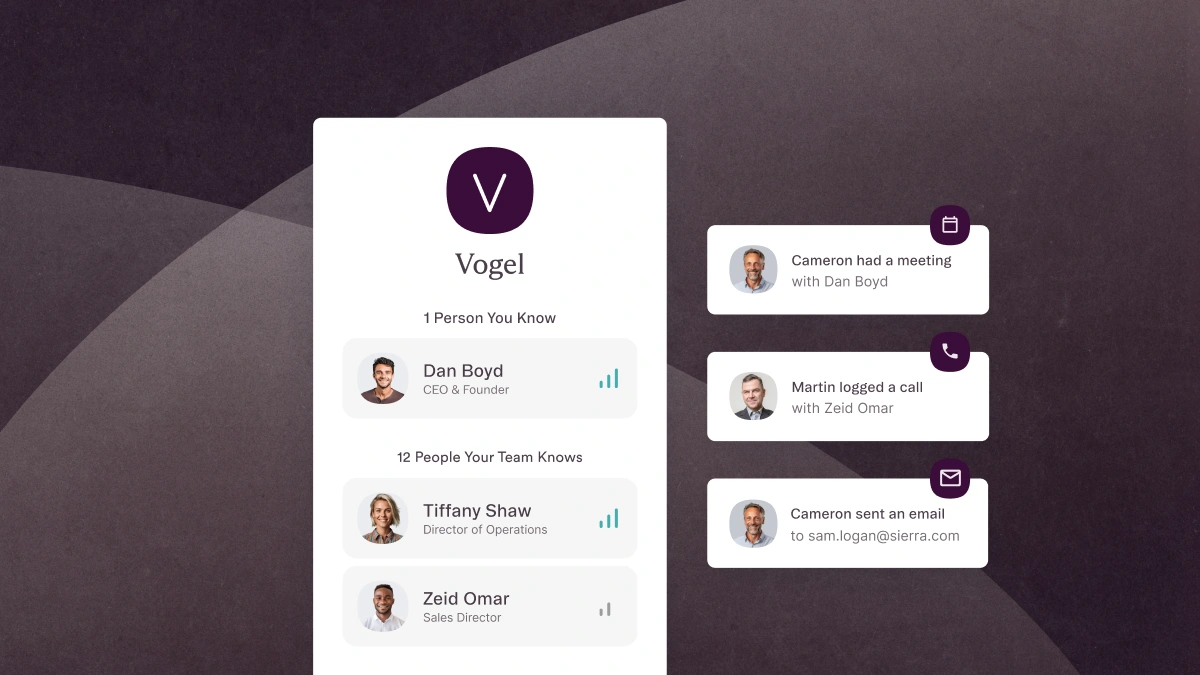
- Affinity: the AI-first private capital CRM, which captures email and calendar activity automatically to map the firm's relationships and surface warm paths to targets.
For help choosing a CRM, see our private equity CRM buyer's guide, and for the full sourcing process, our guide to deal sourcing strategies and tools.
Human checkpoint: people review new opportunities before they enter the pipeline.
What AI tools do PE firms use for due diligence?
PE firms use AI research platforms and AI features inside virtual data rooms for due diligence. Diligence is where AI use runs deepest: GPs name it among the highest-ROI uses in Bain's GP Outlook 2026, and half of dealmakers use AI regularly in diligence, according to Datasite and FT Longitude.
- AlphaSense: AI search across filings, research, and expert call transcripts; it acquired Tegus and its transcript library in 2024 (learn about the AlphaSense Affinity connector here).
- Third Bridge: expert interviews and research content for investment teams.
- Hebbia: AI agents that extract structured answers from large document sets, each linked back to its source page.
- Datasite: virtual data rooms with AI features for organizing and reviewing deal documents.
Human checkpoint: every extracted figure is traced back to the source document before it lands in a model or memo.
The best AI tools for writing investment memos
The best AI tool for writing an investment memo is one grounded in your firm's own documents: a general AI assistant connected to the deal's files and prior memos, or a finance-specific platform built for memo workflows. Whichever you choose, it should cite a source for every claim and keep deal documents inside the right team.
- General assistants (ChatGPT Enterprise, Claude, Microsoft Copilot) connected to firm documents and templates.
- Blueflame AI: agentic AI built for investment and M&A workflows; part of Datasite since 2025.
- Hebbia: extracts figures from data rooms and filings with page-level citations, which IC members can check.
What to require:
- Source citations for every claim and figure.
- Access to the firm's own templates and prior deals.
- Permissions that keep deal documents inside the right team.
Human checkpoint: the deal team owns the thesis and the numbers. AI drafts; people decide.
AI tools for financial modeling and analysis
AI modeling tools work inside the spreadsheet. They build models from filings and data, explain formulas, and run sensitivity checks, which cuts the time from data room to first model.
- Microsoft Copilot in Excel: an assistant inside Excel that analyzes data and helps write formulas.
- Claude for Excel: an Excel add-in that reads, analyzes, and edits workbooks, explaining each change it makes.
Human checkpoint: models are checked cell by cell before they reach the investment committee.
AI tools for portfolio monitoring and value creation
Operating teams need to see a KPI move without rebuilding the spreadsheet each quarter. Portfolio monitoring tools do that by pulling data out of portfolio company reports and tracking it over time.
- 73 Strings: AI data extraction, portfolio monitoring, and valuation for private markets.
- Chronograph: portfolio monitoring and reporting, with an AI layer and a connector that brings portfolio data into Claude.
Some sponsors go further and embed their own AI builders in portfolio companies. Hg Catalyst places AI build teams in portfolio companies, according to Tristan Ratchford, Hg Catalyst's CTO, on Carried Interest.
Human checkpoint: operating partners review flagged changes before they reach the board.
AI tools for investor relations and fundraising
A common IR setup pairs a general AI assistant with the LP data in the CRM. The assistant summarizes an LP's history and interests before a meeting and drafts updates; the CRM supplies the record of every prior conversation. 21% of firms use AI to summarize investor profiles, according to FTI's 2026 PE AI Radar.
For LP-management software, see our deal management software buyer's guide.
Human checkpoint: IR leads approve every LP-facing message.
AI meeting notetakers
Many PE firms use dedicated AI notetakers to capture and summarize meetings. Compliance teams treat them differently from other AI tools, because recordings capture exactly the conversations firms most need to protect, and some firms restrict or ban specific notetakers over security concerns.
Before rolling one out, check two things:
- Where recordings and transcripts are stored, and who can access them.
- Whether notes flow into the CRM, so meeting context lands on the right company and contact records.
How to evaluate an AI tool before your firm uses it
Evaluate an AI tool on your own work, under your own compliance rules, before anyone puts deal data into it. Governance is the gap: only 9% of PE respondents are very confident they could pass an AI governance audit within 90 days, according to Grant Thornton's 2026 AI Impact Survey.
Ask seven questions:
- Does it work inside the AI your team already uses?
- Can you check its work?
- Can you see and approve what it changes?
- Does it respect who's allowed to know what?
- What happens to your data?
- Will it clear IT and compliance?
- Is it proven on your workflows, not just in a demo?
Dealmakers rank accuracy and security as their top requirements for AI tools, according to Datasite.
Start with the job, not the vendor
Pick the job you most need to speed up, choose a tool category for it, and connect that tool to your firm's own relationship data. Then test it on your own deals before anyone trusts it with a live one. Get the vendor scorecard PE firms use to vet AI tools before trusting them with deal data, or request a demo of Affinity.
AI tools for private equity: frequently asked questions
What AI tools do private equity firms use?
PE firms use general AI assistants such as ChatGPT Enterprise, Claude, Microsoft Copilot, and Perplexity as the daily working surface, then add specialized tools for sourcing, diligence, memos, modeling, portfolio monitoring, and investor relations. About two-thirds of Affinity's PE customers have connected an AI tool to their CRM since April 2026.
What AI tools should PE associates use?
PE associates usually start with the firm's approved general AI assistant for summarizing documents and drafting, plus whatever spreadsheet assistant and research platform the firm licenses. The firm's compliance rules decide which tools are allowed with deal data.
What is the best AI tool for investment memos?
The best AI tool for investment memos is one grounded in your firm's own documents: a general AI assistant connected to the deal's files and prior memos, or a finance-specific platform such as Blueflame AI or Hebbia. Require a source citation for every claim.
Are general AI assistants like ChatGPT or Claude safe for deal data?
Enterprise versions of general AI assistants can be configured for deal data, but safety depends on the firm's setup: where data is stored, who can access it, and whether the tool respects existing permissions. Clear each tool with IT and compliance before anyone uploads deal documents.
How is the AI tool stack different for PE and VC?
PE stacks lean harder on diligence, modeling, and portfolio monitoring tools, while VC stacks weight sourcing and founder research. Both start with a general AI assistant connected to the firm's relationship data. For the venture view, see our guide to AI tools for venture capital.