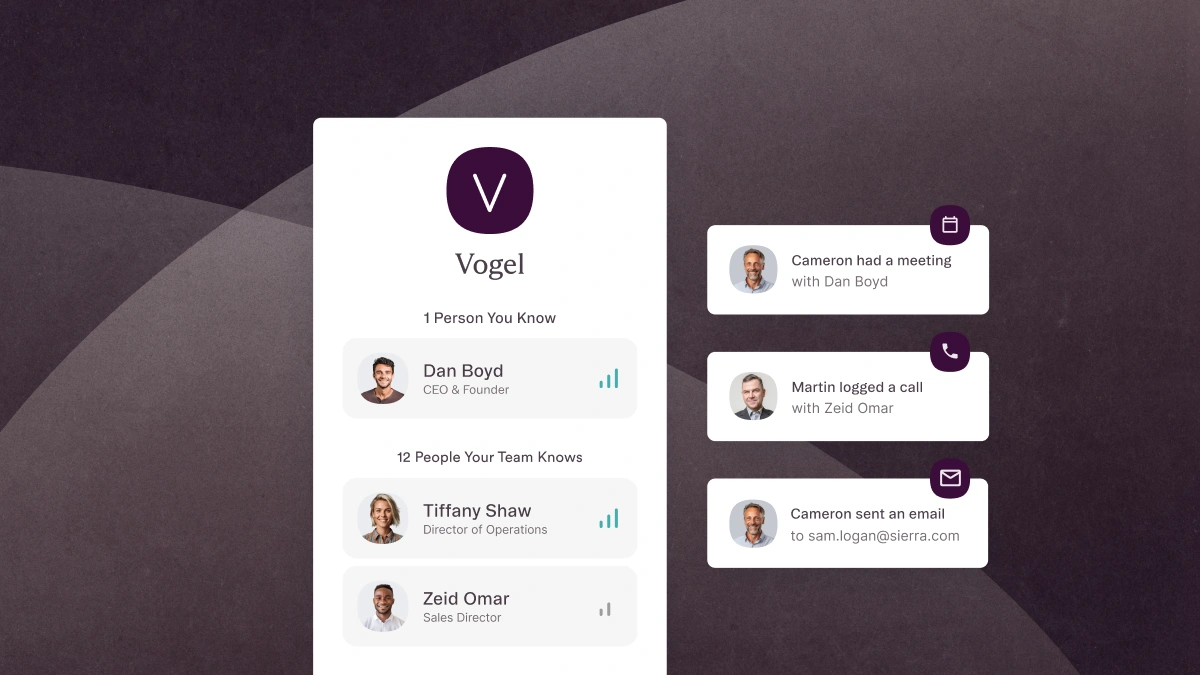
How leading PE firms deploy AI: the three decisions behind every AI strategy

As of fall 2026
ChatGPT’s launch in November 2022 kicked off the generative AI era, but in private equity the shift took longer to take hold. A year ago, the strongest use cases were research, summaries, and first drafts. Agentic workflows and AI tools connected directly to a firm’s data were on the horizon, but far from common.
Today, the environment has shifted, and the data bears it out. Since April 2026, more than 70% of Affinity’s PE customers have connected an AI tool to their CRM, and weekly use has grown about 16 times. Across the industry, Grant Thornton found that 46% of PE leaders are now scaling AI across multiple functions, and another 45% are piloting it.
Adoption hasn’t been uniform. Some firms, like Armira, which appears throughout this guide, have rebuilt origination around AI agents. Its team works with its CRM through Claude, and agents it designed itself handle routine work, with people reviewing anything material.
Others are just beginning. Firm size, security, compliance, and governance all play a part. So does the basic problem of not knowing where to start.
This guide is meant to close that gap. It’s built around three decisions every firm makes when it deploys AI: where its data lives, who builds its AI, and how its people access it.
Executive summary
If you only take three things from this guide, make them these.
- AI has moved from experiment to expectation. More than 70% of Affinity’s PE customers have connected an AI tool to their CRM, and LPs and buyers have started asking about AI in fundraising and diligence.
- Every AI strategy comes down to three decisions: where your data lives, who builds your AI, and how your people access it.
- There’s no single right answer. The right mix depends on your firm’s strategy, maturity, and engineering resources. Four principles hold whatever you choose, and the self-assessment at the end shows where to start.
How to use this guide
If your firm is setting an AI strategy for the first time, read it front to back. If you’re already deploying, start with the self-assessment near the end and work back to the decisions where your answers were least certain.
The guide draws on four kinds of evidence, and each is labeled where it appears. Third-party research is cited by name, with every report listed on the methodology page. On-record interviews come from Carried Interest, Affinity’s PE interview series. Anonymous examples come from conversations with PE practitioners and institutional investors, described without naming the firm. Affinity’s own customer data is labeled as Affinity data.
Why now: AI moved from experiment to expectation
Six months to a year ago, a large multi-strategy institutional investor would choose its tools by asking which vendor had the best features. Now that its own people can build many of those features themselves, the question has changed. “I think today we’re more focused on the data,” one of those leaders told us.
Connecting AI to the firm’s data is the first step, and the industry is still early in the journey. Only 5% of PE firms have fully integrated AI into their operations, compared with 14% of companies across industries, according to Grant Thornton. Competition is what’s pushing firms further, as 31% name competitors’ moves as the top external pressure driving their adoption.
Firms that have deployed AI are getting results, though mostly modest ones. While 95% of funds said their AI initiatives meet or beat their original business case in FTI’s survey, only 17% said they significantly exceed it.
Pressure from outside the firm
The newest pressure is coming from outside. LPs are one source. During its last fundraise, a European mid-market buyout firm heard from its LPs that it was time to professionalize its systems. It set out to move deal tracking off spreadsheets, and as the evaluation went on, the scope grew. With tools like Claude and ChatGPT advancing quickly, replacing the spreadsheet became the smaller part of the job.
Buyers are another. Grant Thornton reports that AI, which once took up a single slide in a CIM or management presentation, now gets dedicated sections that require detailed evidence, and that AI diligence is now part of standard technology and product diligence on nearly every deal.
Few PE firms are ready for that scrutiny. Only 9% are very confident they could pass an AI governance audit within 90 days, according to Grant Thornton, compared with 22% across industries.
And the window is short. A large PE firm with its own in-house data engineering team expects what looks advanced today to be “table stakes” within 12 to 18 months.
AI across the deal lifecycle
Before getting to the decisions behind an AI strategy, it helps to see what deploying AI looks like in practice. This table shows where firms apply AI at each stage and the human checkpoint that keeps a person accountable for the outcome.
{{ai-lifecycle-table="/rt-components"}}
The framework
Every firm deploying AI makes three decisions:
- Where does your data live? Is it scattered across tools, in a system of record, or in a centralized warehouse?
- Who builds your AI? Does the firm build it, buy it, or do both?
- How do your people access it? Through an LLM, on a platform they already use, or through custom applications?
The right answer to each depends on the firm’s AI strategy, its maturity, and its IT resources.
To be clear, these positions aren’t rungs on a maturity ladder. No position is better in general, and each fits a particular kind of firm. And most firms hold a mix. Armira, for example, pairs a system of record with access through LLMs.
Each of the next three sections covers one decision: the options, how real firms chose, the trade-offs, and which option fits which kind of firm.
Decision 1: Where does your data live?
A PE firm’s data lives in one of three places: scattered across tools, in a system of record such as a CRM or fund administration platform, or in a centralized warehouse. Some firms combine the last two by feeding a system of record into a warehouse.
{{ai-data-options="/rt-components"}}
The trade-offs
{{ai-data-tradeoffs-table="/rt-components"}}
Which option fits your firm
- Scattered: usually a starting point, not a strategy. The first step is capturing activity automatically into one place.
- System of record: fits firms whose most valuable data is relationships and pipeline, and whose engineering resources are limited.
- Warehouse: fits firms with data engineers, many data sources, and several strategies to serve. Plan for identifier matching, permissions, and upkeep.
- Mixed: feeding a system of record into a warehouse gives the warehouse a clean relationship and pipeline record to build on.
Signs it’s time to change
- From scattered to a system of record: two colleagues approach the same company without knowing it, or a new hire can’t find who the firm already knows. Many firms have this exact blind spot before building their relationship layer.
- From a system of record to a warehouse: the questions people ask now span the CRM, fund administration, market data, and portfolio data at once, and reporting requests are queuing up for developers.
- Rethinking a warehouse: engineers spend more time reconciling identifiers and permissions than building anything new.
Decision 2: Who builds your AI?
Firms build their own AI, buy it from vendors, or combine the two by buying the data layer and common workflows and building where the firm is different.
This decision is about the AI layer: the agents, workflows, and tools that sit on top of your data. Where that data lives and how it’s captured is Decision 1. For most PE firms, the practical question isn’t whether to build, but where building is worth it.
Build
Building means the firm’s own engineers create and run its AI, usually on top of data the firm already holds. One institutional investor built an internal knowledge base, with ChatGPT and Claude on top, to solve a problem every large firm knows: finding the right colleague for a deal. Instead of asking around until someone points to the specialist, an investor looking at a healthcare medtech business can ask the system who in the firm “is the best stock picker” for that sector.
Building can also extend beyond the firm. On Carried Interest, Tristan Ratchford, CTO of Hg Catalyst, described how Hg’s engineers embed inside portfolio companies for six to nine months to build AI products, then hand them over.
What building really takes
- Engineers you have to find and keep. Talent is the top barrier to scaling AI, cited by 35% of firms in FTI’s survey, and a homegrown system depends on the people who built it staying.
- Maintenance that never ends. Models, APIs, and vendor connectors change constantly. Every build needs ongoing work just to keep running, before anyone adds a feature.
- Controls you now own. Permissions, audit trails, and incident response become the firm’s responsibility, and buyers are starting to test them. Only 7% of PE firms have tested an AI incident response plan. The institutional investor above is still working out how to give its warehouse tables anything finer than all-or-nothing access.
- The capture problem doesn’t go away. AI built on incomplete data gives incomplete answers. Building on top of your data still requires someone to capture it first.
- Time away from deals. Every hour spent maintaining an internal tool is an hour not spent on the firm’s actual edge.
Buy
Buying means packaged agents and pre-built AI skills from vendors. It gets a firm to results without a team of engineers, which matters because engineers are hard to find: FTI’s survey ranks talent as the top barrier to scaling AI, cited by 35% of respondents.
Hybrid
Armira bought its data layer and built its own market-intelligence agent on top. That’s the pattern Tristan Ratchford describes below: build only the part that makes the firm different.
The trade-offs
{{ai-build-tradeoffs-table="/rt-components"}}
Tristan Ratchford put the hybrid principle this way:
“Ferrari could build tires and they would probably do a good job, but they don’t. They focus on engines and chassis.”—Tristan Ratchford, CTO, Hg Catalyst, on Carried Interest
Which option fits your firm
- Build: fits firms with engineering teams and workflows no vendor covers. Budget for ongoing maintenance, not just the build.
- Buy: fits firms without engineers that want results quickly. Watch for overlapping tools.
- Hybrid: buy the data layer and common workflows, and build only where the firm is truly different.
Signs it’s time to change
- From buy to hybrid: a vendor’s packaged workflow covers most of what you need, but your edge sits in the part it doesn’t.
- From build to buy or hybrid: maintaining what you built crowds out new work, or a vendor now ships what your team built two years ago.
- Any position: you’re paying more than one vendor for the same capability.
Decision 3: How do people access AI?
People reach a firm’s AI in three ways: through an LLM like Claude or ChatGPT, inside a platform they already use, or through custom applications built for the firm. Of course, the routes can be combined. It isn’t atypical to see firms using all three approaches to varying degrees.
{{ai-access-options="/rt-components"}}
Which option fits your firm
- LLM: fits teams already using Claude or ChatGPT every day. Requires governance over what each connection can read and write.
- On platform: fits less technical users and process-heavy teams.
- Custom applications: fits firms with engineering resources and needs that don’t fit a standard tool.
- Mixed: most firms use more than one. The goal is the same data available wherever people already work.
Signs it’s time to change
- Add an LLM route: people are already pasting firm data into Claude or ChatGPT on their own. That use is happening either way, and a governed connection is safer than copy and paste.
- Add an on-platform route: less technical users aren’t adopting the LLM route, and AI use is concentrated in a few people.
- Add a custom application: the same question gets asked across the firm often enough to deserve its own interface.
What gets in the way
Whatever a firm decides, its rollout runs into the same human barriers. FTI ranks talent as the top barrier, cited by 35% of respondents, followed by data readiness (33%), organizational change (25%), and unclear ownership (25%). The conversations behind this guide put detail on each.
Manual entry
Data readiness starts with data entry. At one large investor we spoke with, entering a deal into the pipeline means filling in 40-plus fields by hand. Every field left blank is one the AI can’t see.
How firms address this: automate capture before adding fields. Every field filled from email and calendar activity is one nobody has to type.
A culture of sharing
AI can only work with what people share. Most Affinity customers start with broad email access, and senior people often start more selectively.
How firms address this: start with the people willing to share, and let the results spread. Senior people often start selectively, and that’s normal.
Privacy controls
Many firms need privacy controls set precisely across the firm, by team, deal, or type of data. AI features don’t usually ship with that level of control, so rollouts stall until they do.
How firms address this: settle the rules before the rollout: who can see which deals and relationships, and what each AI connection is allowed to read. Then test every tool against those rules, which is scorecard question 4.
Change management
Tristan Ratchford calls AI transformation a change-management problem, and warns that “when it’s everyone’s job to do AI and embrace AI, then it’s no one’s job.” That’s FTI’s unclear-ownership barrier, in one line.
How firms address this: train on a regular cadence and name an owner. The European firm has training in place every few weeks, for 12 to 18 months. Tristan’s warning is that ownership shared by everyone is ownership held by no one.
The four principles leading firms follow
Each maps to questions in the vendor scorecard in the next section, so you can test any tool against it.
1. Connect AI to the data only your firm has
Tested by scorecard question 1.
Stanford’s Digital Economy Lab studied 51 successful enterprise AI deployments and found that in 42% of them, the choice of model was fully interchangeable. The lasting advantage came from how the work was organized around the model.
For a PE firm, the raw material for that work is its own data. For the European buyout firm, that means institutional memory: past bids, and the advisers it used and the rates they charged.
“We are rebuilding private-markets origination around agents, with Affinity as the data layer underneath.”—Niklas Krusche, Head of Origination & AI, Armira
2. Give agents the work that supports judgment, not the judgment itself
Tested by scorecard question 2.
Deal teams draw this line themselves. In Datasite’s survey of 1,000 senior dealmakers, 22% would let AI make the final recommendation on whether to sign a deal, and 45% say that decision should stay entirely human. Not one respondent thought signing decisions should be made entirely by AI. Armira’s agent surfaces opportunities, and people review them.
3. Require human approval and a record of every change
Tested by scorecard questions 3, 4, 5, and 6.
In our conversations with customers, three controls come up again and again: a person approves every change AI makes, access is read-only by policy, and email stays out of AI tools.
Compliance has to shape what gets captured, too. For example, firms that won’t approve full meeting transcripts often approve summaries. At the large PE firm, notetaker approval is still, as one person there put it, “a battle that I’m waging internally.”
These controls are becoming something firms have to prove out rather than just practice. Grant Thornton reports that buyers in AI diligence now examine decision rights, oversight structures, and whether AI outputs can be audited, and that lenders, insurers, and auditors are paying closer attention to the same questions. Few firms are prepared to answer them: only 7% of PE firms have tested an AI incident response plan. A record of every change is what turns a control into evidence.
4. Test AI on your own work: evals over demos
Tested by scorecard question 7.
Tristan Ratchford put it plainly on Carried Interest: “Prioritize evals over demos.” An eval runs a tool against the firm’s own past work, where the right answers are known, and scores the result.
Billy Deitch, Partner at Oak HC/FT, explained on Carried Interest why that matters. He finds AI strong at work that’s hard because it takes a lot of time. Questions that are genuinely difficult are different: when he isn’t sure a right answer even exists, AI “will confidently say that it got the right answer.” His example was a tool reporting back that it had finished a market-sizing analysis he doubted was possible to do. His approach, at least for now, is to keep “a critical eye.” A demo can’t tell you whether the tool got it right.
Self-assessment: where does your firm stand?
The self-assessment has two parts. The first places your firm on the framework and points to a next step. The second is a vendor-neutral scorecard for any AI tool you’re evaluating, with each question tied to the principle it tests.
Part 1: Place your firm on the framework
{{ai-framework-quiz="/rt-components"}}
Common profiles
Most firms fall into one of four patterns. Find the one closest to yours.
{{ai-profile-cards="/rt-components"}}
Part 2: The vendor scorecard
{{ai-tool-scorecard="/rt-components"}}
Run the scorecard on the tool you already use as well as the one you’re evaluating. By one large PE firm’s estimate, today’s advanced setups will be table stakes within 12 to 18 months, and the firms that know their gaps now will have the most time to close them.
How Affinity approaches this
This section describes Affinity’s own approach. Everything before it is vendor-neutral.
Affinity is the AI-first private capital CRM. Here’s how it maps to the three decisions.
- Where your data lives: Affinity captures relationship activity automatically into a system of record, and shares data into firms’ warehouses.
- Who builds: packaged agents for common workflows, and MCP access so firms can build their own agents on top of Affinity’s data, the hybrid approach described in Decision 2.
- How people access it: through LLMs over MCP, inside the Affinity platform, and through APIs.
Affinity doesn’t train models on customer data, and its contracts with AI providers prohibit them from training on it. It operates with zero data retention. Restricted Opportunities, on the Enterprise plan, limits deal visibility to the people who need to know.
To see how this works with your firm’s data, request a demo or book an AI workshop with our team.
{{request-demo-short="/rt-components"}}
Methodology and sources
Affinity data. Figures come from Affinity product data, pulled October 15, 2026.
Anonymous conversations. Examples described without naming the firm come from conversations with PE practitioners and institutional investors in 2026.
On-record interviews. Billy Deitch, Partner, Oak HC/FT, on Carried Interest, Episode 5. Tristan Ratchford, CTO, Hg Catalyst, on Carried Interest, Episode 6 (forthcoming).
Third-party research.
- Grant Thornton, Private Equity Insights: 2026 AI Impact Survey (PE respondents, n=100), April 2026; and “Buyers are asking questions about AI, and it’s impacting valuations,” July 24, 2026.
- FTI Consulting, 2026 Private Equity AI Radar. Survey of 200 senior fund and operating leaders at firms with $1B+ AUM, conducted December 2025.
- Bain & Company, Private Equity’s Reality Check: The GP Outlook for 2026. Survey of 103 investment and IR professionals with StepStone, December 2025 to January 2026.
- Datasite and FT Longitude, The New Deal Team: What 1,000 Dealmakers Reveal About AI-Driven M&A, 2026. Survey of 1,000 senior dealmakers across M&A, not limited to private equity.
- Stanford Digital Economy Lab, The Enterprise AI Playbook: Lessons from 51 Successful Deployments (Pereira, Graylin, Brynjolfsson), 2026.