Yes, private equity is still a people business
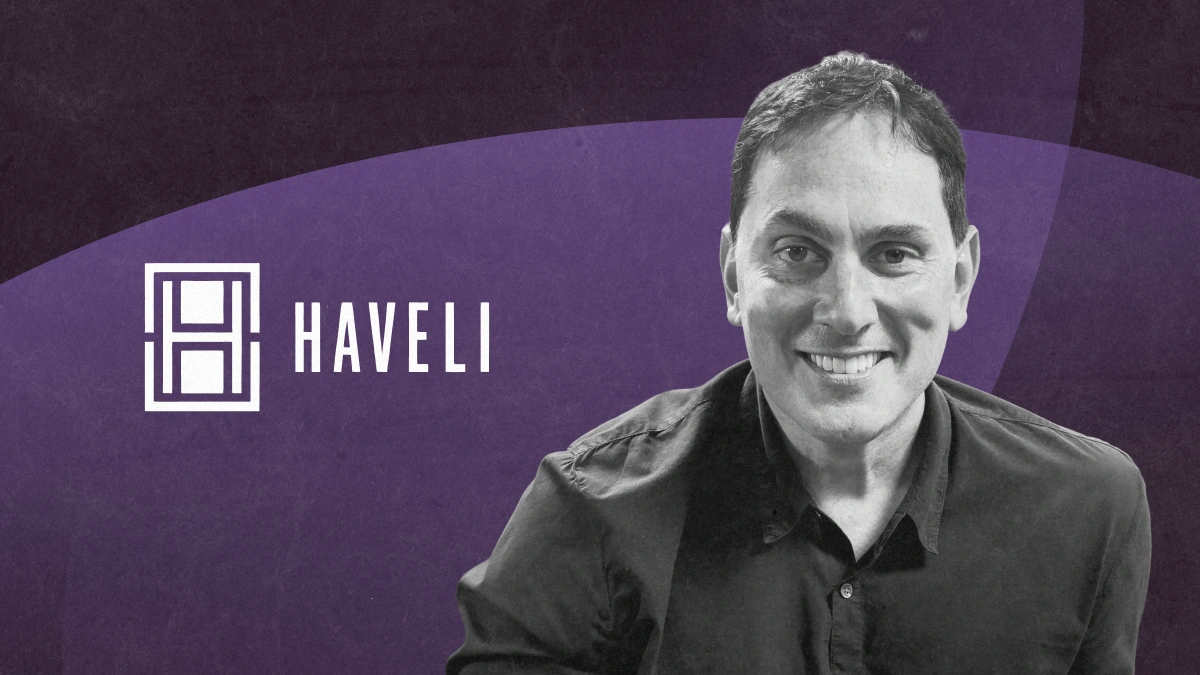

Before it was called private equity, the banks had a different name for it. "The banks used to call it financial entrepreneurship," recalls Brian Sheth, Chief Investment Officer and Founder of Haveli Investments. "The Financial Entrepreneurs Group." The people who built PE were entrepreneurs who happened to work in finance, drawn to the messy, human work of backing operators and building companies.
Somewhere along the way, as the industry grew and hardened into a prestige career track, the selection filter shifted. Sheth has watched that shift from close range. He worked at Deutsche Bank, Goldman Sachs, and Bain Capital before co-founding Vista Equity Partners in 2000, where he was president for two decades, and in 2021 he founded Haveli Investments, a software-focused firm whose first buyout fund closed at $4.5 billion. After roughly 30 years of watching who gets hired and who succeeds, he has noticed something he finds genuinely puzzling.
What actually separates the great ones: genuine interest
The easy misread here is that Sheth is describing charisma, and that private equity should hire for the biggest personality in the room. He isn't, and his own examples make that clear. Asked about the legends of the business, he names Henry Kravis and George Roberts, "two of the most fun, interesting people in the world to be around," and then makes this point: "both their personalities are very different, but in their own ways they're extraordinarily engaging."
Very different personalities, but both engaging. That combination rules out the extrovert theory. The trait Sheth is pointing at is genuine interest in other people, the kind that makes someone actually want to spend an afternoon with a founder when there's no deal on the table. An introvert can have it in abundance. A gregarious, back-slapping dealmaker can completely lack it. Are you actually curious about the person across the table when nothing is being transacted? That’s the question he's getting at.
Where it honestly doesn't matter as much
Of course, liking people isn’t a universal requirement in every corner of investing. Sheth is careful about this: "Rarely does that work. I have seen it work with a couple folks. They tend to be more like distressed investors."
That exception makes sense. Distressed investing is a more analytical game, with fewer stakeholders to win over and more of the edge coming from rigorous, unsentimental analysis of a broken balance sheet. A brilliant distressed investor who would rather read an indenture than have lunch can do extraordinarily well. So the claim is probabilistic rather than absolute. In most of private equity, where the work is fundamentally about persuading operators to partner with you and staying close to them for years, the person who doesn't like people rarely thrives. In a specific, analytical niche, they sometimes do. Both things are true, and the honest version of the argument holds them together.
You can't fake it, so don't try
If genuine interest in people is the trait that matters, the obvious temptation is to manufacture it, to coach the reserved analyst into performing warmth. Sheth's advice runs directly against that, and it applies whether you're naturally outgoing or naturally quiet. "Try to be the best version of yourself that you are. Don't try to be anything you're not. Don't try to emulate those qualities because it's going to come off as artificial."
This is the opposite of a charm-school prescription. Sheth is telling everyone to stop performing a personality and start building a genuine habit. The reserved person who is sincerely curious about others doesn't need to fake gregariousness, and shouldn't. Instead, actually care about the people you work with, and let that show up in your own register instead of a borrowed one. Founders and colleagues can tell the difference between real interest and a technique, and the technique always reads as exactly what it is.
{{request-demo-short="/rt-components"}}
What it means for who you hire
If you take Sheth’s observation seriously, it changes what you screen for. Most private equity hiring optimizes for what’s easy to test: the modeling exercise, the pedigree, the case study. None of those measure whether a candidate actually likes people, and that's the trait Sheth sees in the people who last.
The stakes are higher than they look on an org chart. In Affinity's 2026 Private Equity Benchmark Report, drawn from platform data across more than 300 PE firms, one person holds a median 31% of a firm’s strong relationships. Relationship capital collects around whoever does the relationship work. A firm that hires strong modelers who avoid founders ends up leaning on the few people who don’t.
Treat the technical screen as a floor
Keep the modeling test. It tells you whether someone can do the work. But once a candidate clears it, the gap between a good score and a great one says less about long-term success than how they engage with people. Use technical skill as the threshold and genuine interest as the differentiator.
Ask about relationships with nothing attached
Past behavior with no payoff is the best evidence. Try:
- Who have you stayed in touch with for years with no work reason to? When did you last talk, and about what?
- Tell me about a time you went out of your way to help someone when there was nothing in it for you.
- What has a founder or operator taught you that you couldn’t have learned from their numbers?
Strong answers are specific: a name, a recent conversation, a detail about the other person’s life or business. Weak answers circle back to what the relationship did for the candidate.
Watch how they treat people who can’t help them
Interviews reward performance, and Sheth’s point about borrowed warmth applies to candidates too. The better signal comes from moments candidates don’t think are being scored: how they treat the recruiting coordinator, the assistant who schedules them, the analyst who walks them out. Ask those people what they noticed.
Make reference checks about curiosity
Ask references when they’ve seen the candidate spend time on someone with no deal attached, and whether founders or management teams sought the candidate out. A reference who struggles to answer has told you something.
Know when the rule bends
For a distressed or special situations seat, Sheth’s exception holds: weight analytical depth more heavily. For deal and portfolio roles, where the work is persuading operators to partner with you and staying close for years, don’t relax the screen.
That, in the end, is the value Sheth says he came to prize most, and credits Frank Quattrone with teaching him: "How well you treat people is much more important than how smart you are." It's an unfashionable thing to say in an industry that recruits on raw intelligence and prices itself on being the smartest party at the table. But across 30 years, it's the lesson he keeps coming back to. The people who built private equity liked people. The ones who endure in it still do.
Enjoyed this? More from the Carried Interest series
More from the series:
- Vladimir Andonov (Martis Capital): The second bite at the apple: how Martis Capital convinced a founder to stay in
- Brittany Skoda (Morgan Stanley): The mandate is won before the bake-off starts: how Morgan Stanley won the Hinge Health IPO
- Gary Crittenden (HGGC): Brand or expertise: the 2x2 that decides which PE firms pull ahead
Related Articles



Put your firm’s network to work